
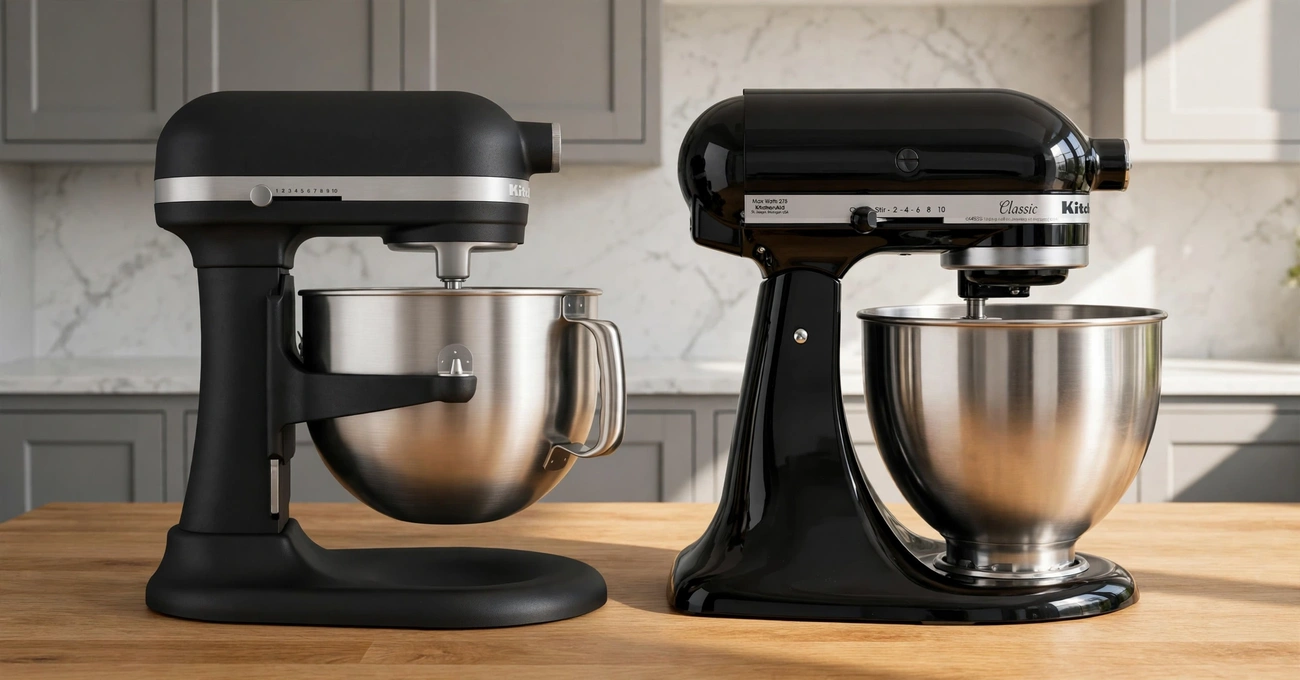
The Best Stand Mixer can make baking and food preparation easier by mixing ingredients, kneading dough, and whipping cream with consistent results. The KitchenAid Classic Series, KitchenAid Artisan Series, and KitchenAid 7 Quart KSM70, offer different capacities and features for home bakers.
The KitchenAid Classic Series (Buy Amazon $399.95) is a practical choice for beginners and smaller households. Its compact design suits everyday baking tasks, including mixing cake batter, preparing cookie dough, and whipping ingredients for simple recipes.
The KitchenAid Artisan Series (Buy Amazon $499.00) is a versatile choice for home bakers who regularly prepare cookies, cakes, bread, and frosting. Its practical bowl capacity and wide range of compatible attachments make it useful for everyday baking and creative kitchen projects.
The KitchenAid 7 Quart KSM70 (Buy Amazon $649.95) is designed for users who need a larger mixing capacity. Its spacious bowl is helpful for preparing bigger batches of dough, batter, and frosting, making it suitable for frequent baking and larger households.
1. KitchenAid Classic 4.5-Quart Series
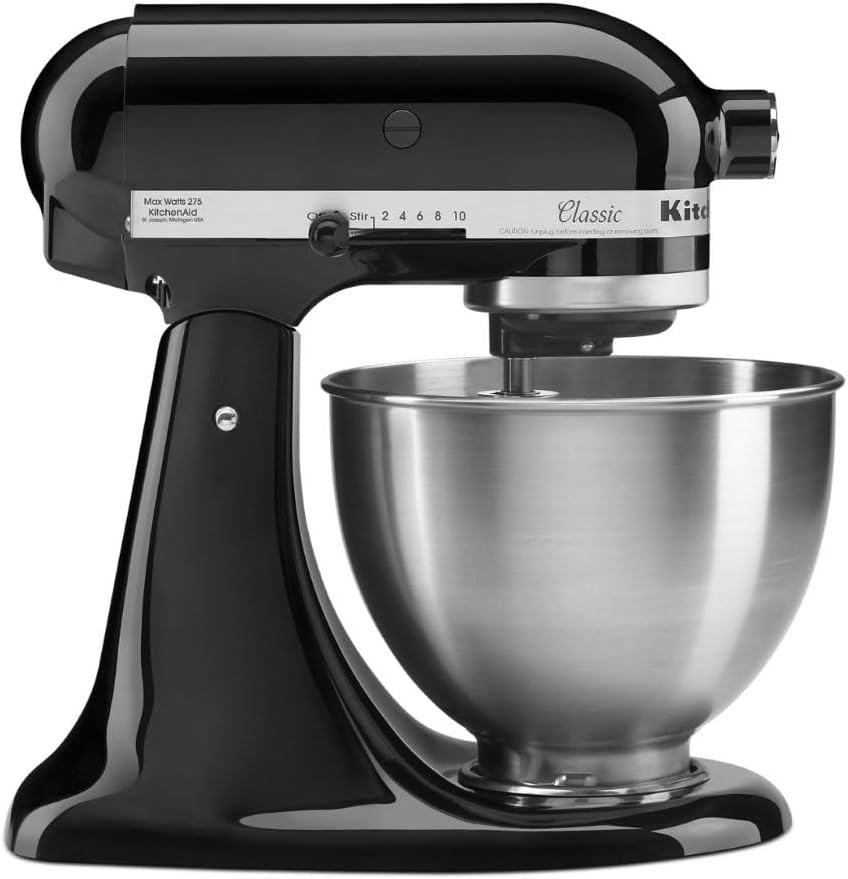
KitchenAid Classic Stand Mixer Review – A Practical Baking Companion for Your Kitchen
Spacefications — Capacity: 4.5 qt (4.26 L) | Speed Setting: 10 | Mixing Action: Planetary, 59 Touchpoint | Power: 275 W | Voltage: 120 V | Dimensions: 14.1″D x 8.7″W x 13.9″H | Weight: 22 lbs.
Baking at home can be a rewarding experience, but mixing ingredients by hand often takes time and effort. Whether you enjoy making cookies, cakes, frosting, or homemade bread, a dependable stand mixer can make the process more convenient. The KitchenAid Classic Series Tilt-Head Stand Mixer is designed for home bakers who want consistent mixing performance, straightforward controls, and a durable appliance for everyday kitchen tasks.
With its familiar design and versatile mixing attachments, this mixer offers a practical alternative to mixing everything manually. It can help with everyday baking preparation, from creaming butter and sugar to combining cake batter and whipping ingredients. Its tilt-head design also makes it easier to access the bowl when adding ingredients or removing a finished mixture.
However, the Classic model is not intended to meet every professional baking need. Its capacity, mixing power, and available accessories should be considered in relation to the recipes you prepare most often. This review explores its strengths, limitations, and overall value for home use.
Design and Build Quality
The KitchenAid Classic stand mixer has a timeless appearance that fits comfortably into many kitchen styles. Its rounded body, polished mixing bowl, and simple controls give it a traditional look without unnecessary decorative details. It is designed to remain useful for years rather than follow short-lived kitchen trends.
One of its most noticeable advantages is its sturdy construction. Compared with lightweight hand mixers, a stand mixer provides a more stable platform for routine mixing. Once positioned on a suitable countertop, it allows users to work on other preparation tasks while the ingredients are being mixed.
The tilt-head design is particularly practical. Raising the head gives you easier access to the bowl and attachments, making it convenient to add flour, scrape down the sides, or remove the bowl after mixing. This straightforward arrangement is helpful for beginners who may be unfamiliar with stand mixers.
The appliance does occupy a permanent amount of counter space, so it is worth considering where it will be kept. Its weight can also make frequent movement less convenient. For people who bake regularly, leaving it accessible may be more practical than storing it after every use.
Mixing Performance for Everyday Baking
The main purpose of the KitchenAid Classic is to simplify mixing tasks, and it is well suited to many common home-baking recipes. Its planetary mixing action moves the attachment around the bowl while the attachment itself rotates, helping ingredients combine across a broader area.
This is useful when preparing cake batter, cookie dough, muffin mixtures, and other everyday recipes. Instead of holding a hand mixer throughout the process, users can allow the stand mixer to operate while measuring additional ingredients or preparing baking trays.
Creaming butter and sugar is another common task. Proper creaming helps incorporate air into certain baked goods, and the mixer can make this stage easier and more consistent when used at an appropriate speed. It is also useful for combining softened butter with other ingredients when making frosting or fillings.
Results still depend on technique. Butter temperature, ingredient measurements, mixing duration, and the selected speed all affect the final texture. Scraping the bowl when necessary also helps prevent unmixed ingredients from remaining along the sides.
For routine baking, the KitchenAid Classic provides a convenient way to reduce repetitive manual work and make preparation more organized.
Cakes, Cookies, and Frosting
Home bakers often prepare several types of recipes, and the KitchenAid Classic is versatile enough to support many of them. Cake batter can be mixed with less physical effort, while cookie dough becomes easier to prepare in batches.
Cookie preparation can be particularly demanding when ingredients are thick or when butter and sugar need to be combined thoroughly. The mixer helps manage this process, although very stiff dough should be handled according to the manufacturer’s guidance rather than forced through prolonged mixing.
The mixer is also useful for frosting and buttercream. Its whisk attachment can incorporate air into suitable mixtures, helping produce a lighter texture. Starting slowly is important when mixing powdered sugar or other ingredients that can scatter, while gradually increasing the speed can help keep the process controlled.
For whipped ingredients, the whisk attachment provides another useful option. Users should monitor the mixture as it thickens because overwhipping can affect texture. With practice, it becomes easier to recognize when a recipe has reached the desired consistency.
These everyday applications make the Classic a helpful choice for people who enjoy baking cakes, cookies, cupcakes, and desserts for family gatherings or special occasions.
Bread Dough and Heavier Mixing Tasks
The KitchenAid Classic can also help with selected homemade bread recipes. Its dough hook is designed to mix and knead dough, reducing the amount of manual effort required during preparation.
For occasional bread making, this can be a welcome convenience. Combining ingredients and developing dough by machine may simplify a process that otherwise requires considerable kneading by hand.
However, not all doughs place the same demands on a mixer. Dense doughs and large batches can put greater strain on the motor, so it is important to follow the manufacturer’s recommended quantities and operating guidance. The Classic is better suited to appropriate household baking tasks than to constant heavy-duty production.
People who regularly prepare large quantities of bread or very stiff dough may prefer a mixer designed for more demanding workloads. For typical home baking, however, the dough hook adds useful versatility.
Ease of Use and Controls
One of the KitchenAid Classic’s strengths is its simple operating experience. The speed control is straightforward, making it easy to select a suitable setting for different mixing stages.
Lower speeds are helpful when beginning to combine ingredients or working with flour that might otherwise scatter. Faster settings can be useful for whipping or incorporating more air into suitable mixtures. Choosing the right speed helps control splashing, improve consistency, and avoid unnecessary mess.
The tilt-head arrangement also makes routine use convenient. You can lift the head to reach the bowl, change attachments, or add ingredients without having to dismantle the entire appliance.
New users should still take time to learn how each attachment works and how to secure the bowl correctly. Following the recipe’s mixing instructions is important because excessive mixing can affect the texture of certain cakes and doughs.
Overall, the Classic offers a relatively accessible experience for beginners while providing useful features for experienced home bakers.
Cleaning and Maintenance
Cleaning is an important part of any baking routine. Flour, butter, sugar, and sticky mixtures can collect around the bowl and attachments, so removing residue promptly helps keep the mixer ready for its next use.
The stainless-steel bowl is generally straightforward to clean, and the removable attachments make it easier to wash individual components. Cleaning requirements can vary by attachment, so check the manufacturer’s instructions before placing any part in a dishwasher or using a particular cleaning method.
The mixer body should be wiped with a soft, damp cloth as appropriate, taking care not to expose electrical components to water. Cleaning the bowl and attachments soon after use can also prevent ingredients from drying and becoming harder to remove.
Although the mixer has more components than a simple hand mixer, its routine maintenance is manageable. Establishing a quick cleanup habit makes it easier to enjoy baking without leaving a large washing task for later.
Limitations to Consider
Despite its versatility, the KitchenAid Classic is not the perfect choice for everyone. Its bowl capacity may be limiting for people who frequently prepare large batches for parties, community events, or commercial purposes.
Its performance with dense dough also deserves consideration. Heavy mixtures require more effort from the motor, and users should avoid exceeding recommended quantities or operating limits.
Another factor is the initial purchase cost. A stand mixer is a more substantial investment than a basic hand mixer, especially for someone who only bakes occasionally. It also requires enough storage or counter space to remain convenient.
Finally, additional attachments may be sold separately. Buyers interested in expanding the mixer’s functions should check compatibility and the cost of any accessories before purchasing.
Verdict
The KitchenAid Classic Series Tilt-Head Stand Mixer is a practical choice for home bakers who want to simplify everyday preparation. Its sturdy design, convenient tilt-head mechanism, familiar controls, and versatile mixing attachments make it useful for cakes, cookies, frosting, and selected bread recipes.
Its main advantages are ease of use, reduced manual effort, and versatility across common baking tasks. Its limitations include its relatively modest capacity for larger batches, the demands of heavy dough, and the counter space it requires.
Overall, the KitchenAid Classic is worth considering if baking is a regular part of your routine and you want a dependable stand mixer for household recipes. It may be unnecessary for someone who rarely bakes, but for enthusiastic home cooks, it can make preparation more convenient and enjoyable. By matching its capabilities to your usual recipes, you can decide whether it is the right long-term addition to your kitchen.
2. KitchenAid Artisan 5-Quart Series
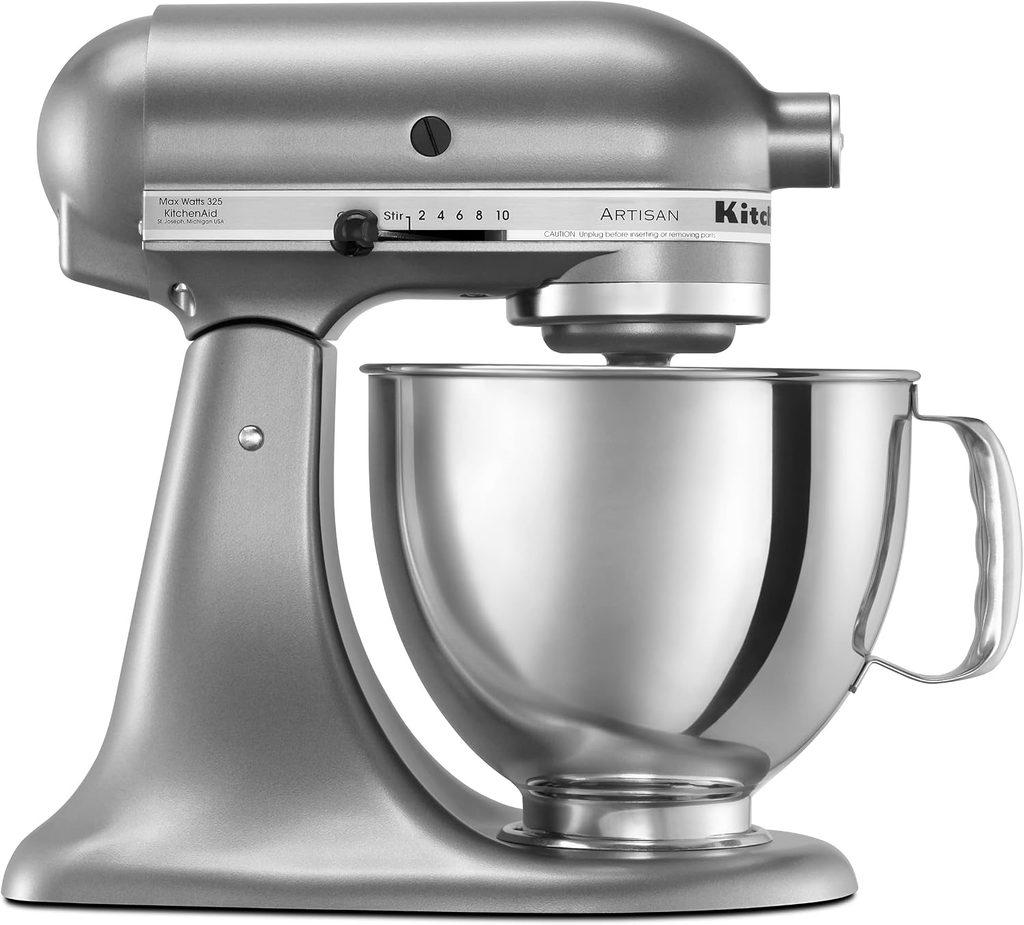
KitchenAid Artisan Stand Mixer Review – A Versatile Partner for Home Baking
Spacefications — Capacity: 5 qt (4.73 L) | Speed Setting: 10 | Mixing Action: Planetary (59-Point) | Power: 325 W | Voltage: 120 V | Dimensions: 14.1″D x 8.7″W x 13.9″H | Weight: 22 lbs.
For anyone who enjoys baking at home, a reliable stand mixer can make preparing favorite recipes easier, faster, and more enjoyable. The KitchenAid Artisan Series Tilt-Head Stand Mixer is designed to handle a wide range of kitchen tasks, from mixing cake batter and cookie dough to whipping cream and kneading suitable bread dough. Its classic appearance, convenient controls, and versatile attachments make it an appealing choice for both enthusiastic beginners and experienced home bakers.
The Artisan series stands out because it combines everyday practicality with room to explore new recipes. Instead of relying on a hand mixer for every task, users can place ingredients in the bowl, select an appropriate speed, and let the appliance do much of the repetitive work. The tilt-head design also makes adding ingredients and changing attachments convenient.
However, this mixer is a substantial kitchen appliance, and its purchase price, storage needs, and limitations with demanding dough recipes deserve consideration. This review examines its everyday usefulness and whether it is a sensible choice for your kitchen.
Design and Build Quality
The KitchenAid Artisan has a distinctive design that looks at home in both traditional and contemporary kitchens. Its rounded body and polished stainless-steel bowl give it a refined appearance, while the Contour Silver finish offers a neutral look that works well with many kitchen color schemes.
Beyond appearance, the mixer is designed for regular household use. Its sturdy body helps it remain stable during common mixing tasks, and its familiar shape makes it easy to recognize and operate. Unlike lightweight hand mixers that must be held throughout the process, a stand mixer allows users to focus on other preparation work while ingredients combine.
The tilt-head mechanism is one of its most practical features. Raising the head gives users better access to the bowl, making it easier to add ingredients, remove the bowl, or change attachments. When the head is lowered and secured properly, the mixer is ready for operation.
The appliance does take up meaningful counter space. Its weight also makes moving it frequently less convenient. For people who bake regularly, keeping it in an accessible location can make it a more useful part of the kitchen.
Everyday Mixing Performance
The Artisan is designed to make common baking tasks less demanding. Its planetary mixing action helps the attachment move through the bowl, combining ingredients from different areas rather than simply rotating in one fixed position.
This is useful when preparing cake batter, muffin mixtures, cookies, and frosting. Instead of holding a hand mixer for several minutes, users can let the stand mixer work while preparing baking trays or measuring the next ingredients.
Creaming butter and sugar is another important task. This process helps incorporate air into recipes that depend on a light texture. Using an appropriate speed and allowing enough mixing time can help create a well-combined mixture before the remaining ingredients are added.
Cookie dough can also be easier to prepare with a stand mixer. The appliance helps combine butter, sugar, eggs, and dry ingredients, reducing repetitive manual effort. However, very thick doughs should be handled according to the manufacturer’s guidance, and users should avoid exceeding recommended quantities.
As with any mixer, good results depend on the recipe and technique. Ingredients should be measured carefully, and the bowl may need to be scraped occasionally to ensure that flour or butter around the sides is incorporated.
Baking Cakes, Cookies, and Desserts
For home bakers who frequently prepare desserts, the KitchenAid Artisan offers considerable convenience. Cake batter can be mixed efficiently, making it easier to prepare treats for birthdays, family gatherings, and other occasions.
Its flat beater is suitable for many everyday mixing tasks, including cookie dough, cake mixtures, and certain frostings. Users can start slowly to reduce splashing and gradually increase the speed as ingredients become incorporated.
The wire whisk provides another useful option for recipes that require air to be incorporated. It can help whip cream and prepare suitable egg-based mixtures. Monitoring the process is important because overwhipping can change the texture of cream or other ingredients.
The Artisan is also useful for preparing buttercream and other dessert toppings. Its ability to mix ingredients without requiring constant hand operation can be particularly helpful when preparing several batches.
For people who enjoy experimenting with homemade desserts, the mixer provides a practical foundation for exploring different recipes without needing to perform every mixing step manually.
Kneading Dough and Making Bread
The included dough hook expands the Artisan’s usefulness beyond cakes and cookies. It can help combine and knead suitable bread dough, reducing the physical effort associated with traditional hand kneading.
For occasional homemade bread, pizza dough, or similar recipes, this feature can be valuable. Users can prepare the ingredients, allow the mixer to work at the recommended speed, and then continue with the recipe’s resting and shaping stages.
However, dough places different demands on a mixer than cake batter or whipped cream. Dense mixtures can strain the motor, especially when the bowl is overloaded or the mixer operates beyond its recommended limits. Following the manufacturer’s instructions for dough preparation is therefore important.
The Artisan is best viewed as a versatile household mixer rather than a commercial machine intended for continuous heavy-duty production. People who regularly prepare very large quantities of stiff dough may want to consider a model designed specifically for that workload.
For ordinary home baking, though, the dough hook adds meaningful flexibility and helps make bread preparation more approachable.
Convenient Controls and Ease of Use
The Artisan uses a straightforward speed control that lets users adjust mixing intensity according to the recipe. This is an advantage for people who prefer practical controls over complicated digital interfaces.
Lower speeds are helpful when combining dry ingredients or beginning a mixture, while higher settings are useful for tasks such as whipping. Choosing the appropriate speed helps reduce splashing and provides better control over the final texture.
The tilt-head design makes routine operation more convenient. Users can raise the head when adding ingredients or changing attachments, then lower and secure it before mixing. This arrangement is easy to understand after a little practice.
The mixer does require users to become familiar with its attachments. The flat beater, dough hook, and wire whisk serve different purposes, and choosing the correct one can improve results. Following recipe instructions also helps prevent overmixing, which can negatively affect some baked goods.
Overall, the Artisan offers an accessible experience for beginners while providing enough flexibility for experienced bakers to use it regularly.
The Pouring Shield and Ingredient Handling
The included pouring shield is a useful addition when preparing mixtures that contain flour, sugar, or other ingredients that can scatter. It helps guide ingredients into the bowl while reducing mess during mixing.
This is particularly helpful when adding dry ingredients gradually or incorporating additional components into a recipe. Although the shield cannot eliminate every spill, it can make the process tidier and reduce the need to clean the surrounding counter.
Users should still add ingredients carefully and begin mixing at an appropriate speed. Adding large amounts of flour too quickly can create dust and make the mixture harder to control.
The shield is a small feature, but it contributes to a more organized baking experience.
Cleaning and Maintenance
Cleaning is an unavoidable part of baking, but the Artisan’s removable components make routine maintenance manageable. The stainless-steel bowl is straightforward to wash, while the included attachments can be removed for separate cleaning.
Cleaning requirements vary by component, so it is important to follow the manufacturer’s instructions. The bowl and certain attachments are dishwasher-safe, while other parts may require hand washing. Checking the care guidance before cleaning helps preserve their condition.
The mixer body should be wiped with a suitable damp cloth, taking care to keep water away from electrical components. Removing batter or dough residue promptly also makes cleanup easier.
Because the appliance has a substantial body and several accessories, it requires more storage space than a basic hand mixer. However, people who bake frequently may find that the convenience it provides outweighs the extra cleaning and storage effort.
Value for Money
The KitchenAid Artisan is a premium household appliance, so its value depends largely on how often it will be used. For someone who regularly makes cakes, cookies, frosting, bread, and other homemade recipes, the convenience can justify the investment.
Its versatility also offers room for future expansion. KitchenAid provides optional hub-powered attachments for compatible tasks such as preparing pasta or grinding ingredients. These accessories are generally sold separately, so buyers should consider additional costs rather than assuming every function is included.
The Artisan is less necessary for people who bake only occasionally or mainly prepare simple mixtures. A basic hand mixer may be more economical and easier to store for those needs.
Before purchasing, review the current listing, included accessories, warranty terms, and compatibility information to make sure the package matches your expectations.
Verdict
The KitchenAid Artisan Series Tilt-Head Stand Mixer is a versatile option for home bakers who want to simplify everyday food preparation. Its sturdy design, convenient tilt-head mechanism, multiple attachments, and adjustable controls make it useful for cakes, cookies, frosting, whipped ingredients, and suitable dough recipes.
Its biggest advantages are its flexibility, ease of operation, and ability to reduce repetitive manual mixing. Its main disadvantages are the counter space it occupies, its purchase cost, and the care required when handling dense doughs or larger workloads.
Overall, the KitchenAid Artisan is worth considering if baking is a regular part of your routine and you want a mixer that can support a variety of recipes. It may be more than occasional bakers need, but for people who enjoy creating homemade treats and experimenting in the kitchen, it can be a dependable and convenient long-term addition.
3. KitchenAid 7 Quart KSM70
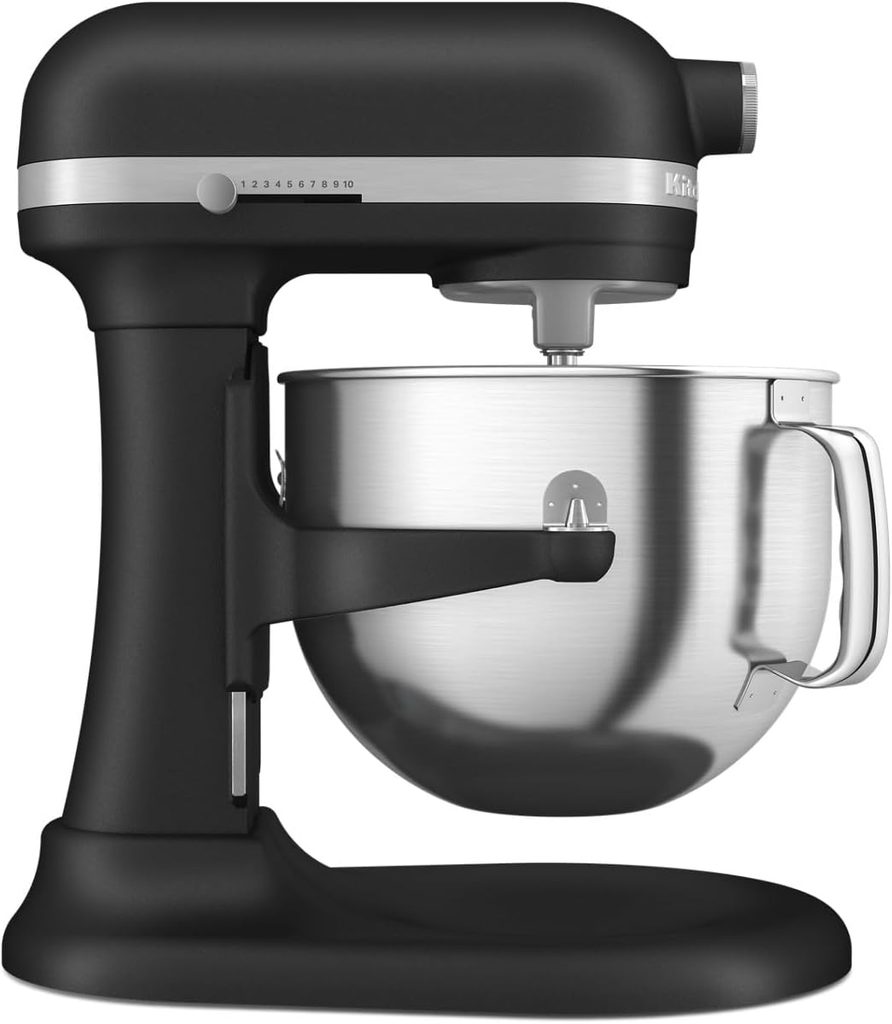
KitchenAid Bowl-Lift Stand Mixer Review – A Powerful Partner for Serious Home Baking
Spacefications — Capacity: 7 qt (6.6 L) | Speed Setting: 11 | Mixing Action: Planetary | Power: 500 W | Voltage: 120 V | Dimensions: 14.63″D x 11.31″W x 16.5″H | Weight: 28 lbs.
For people who enjoy baking regularly, choosing the right stand mixer can make a noticeable difference in the kitchen. Mixing large batches, preparing cookie dough, whipping ingredients, and kneading bread by hand can take considerable time and effort. The KitchenAid Bowl-Lift Stand Mixer is designed to make these tasks more convenient while providing the stability and capacity needed for demanding home recipes.
Unlike tilt-head mixers, this model uses a bowl-lift design. The mixing head stays in place while the bowl moves up and down using a lever. This arrangement provides a sturdy working setup and is particularly useful when preparing heavier mixtures or larger quantities. Its traditional design and versatile attachments make it an appealing option for enthusiastic home bakers.
However, a bowl-lift mixer is not necessarily the best choice for every kitchen. Its size, operating noise, and higher purchase cost should be considered alongside its advantages. This review explores the everyday experience it offers and the types of users who may benefit most from it.
Design and Build Quality
The KitchenAid Bowl-Lift Stand Mixer has a solid, purposeful design. Its broad base and stationary head give it a sturdy appearance, while the bowl is supported by two arms that hold it securely during mixing.
This construction is particularly useful when preparing recipes that place greater demands on the appliance. Compared with a lightweight hand mixer, a stand mixer provides a stable platform and allows users to work on other preparation tasks while ingredients are being combined.
The bowl-lift mechanism is one of the most distinctive features. Instead of tilting the mixer head backward, users lower the bowl to add ingredients or change attachments. Once everything is in place, raising the bowl positions it for mixing. The mechanism is straightforward after a little practice and helps keep the overall structure stable.
The mixer also has a recognizable KitchenAid appearance that suits many kitchen styles. Its sturdy construction makes it feel like a dedicated baking appliance rather than a temporary countertop gadget.
One consideration is its footprint. Bowl-lift models can be larger and taller than some tilt-head alternatives. Buyers should measure their available counter space and cabinet clearance before purchasing, particularly if they intend to store the appliance beneath upper cabinets.
Mixing Performance for Everyday Recipes
The primary purpose of this mixer is to make food preparation easier, and it is suited to many common baking tasks. Its planetary mixing action helps the attachment move through the bowl while rotating, allowing ingredients to combine across different areas.
For cake batter, muffin mixtures, and cookie dough, this can reduce the repetitive effort associated with manual mixing. Users can place the ingredients in the bowl, choose an appropriate speed, and concentrate on other parts of the recipe.
Creaming butter and sugar is another task where a stand mixer can be helpful. This process is important for many baked goods because it helps incorporate air into the mixture. Using the correct speed and allowing enough time can support a more consistent result.
The mixer is also useful for preparing frosting and dessert fillings. Its attachments provide different mixing actions, allowing users to choose a suitable option depending on whether they need to combine ingredients, incorporate air, or work with dough.
Good technique remains essential. Ingredients should be measured accurately, and the bowl may need occasional scraping to ensure that flour or butter around the sides is fully incorporated. Starting at a lower speed also helps reduce splashing when adding dry ingredients.
For people who bake frequently, this combination of stability and versatility can make routine preparation more organized.
Handling Larger Batches
One of the main reasons to consider a bowl-lift stand mixer is its suitability for larger batches. Depending on the exact model, its bowl capacity can accommodate substantial quantities of ingredients, making it convenient for family baking, celebrations, and preparing several portions in one session.
For example, users who bake multiple trays of cookies may appreciate being able to mix a larger quantity of dough without dividing the recipe into several small batches. The same benefit can apply to frosting, cake mixtures, and other suitable recipes.
Preparing larger batches can save time, especially when baking for guests or preparing food ahead of a busy week. However, capacity alone does not determine how much a mixer should handle. Ingredient density and the demands of a recipe also matter.
Users should follow the recommended batch sizes and avoid overfilling the bowl. Heavy mixtures can place additional strain on the motor, so the mixer’s instructions should guide decisions about quantities and operating time.
It is also important to confirm the exact model and bowl size on the Amazon listing, because KitchenAid sells several bowl-lift versions with different capacities and included accessories.
Bread Dough and Heavier Mixtures
Bread making is another reason many home bakers choose a bowl-lift mixer. Its dough hook can combine and knead suitable bread dough, reducing the manual effort involved in developing the dough by hand.
This can be particularly useful for homemade sandwich bread, pizza dough, and other recipes that require kneading. Users can prepare the ingredients, select the recommended speed, and let the mixer handle much of the repetitive work.
The bowl-lift design offers a stable arrangement for these tasks. Keeping the mixing head stationary while the bowl is raised can make the appliance feel secure during appropriate dough preparation.
Nevertheless, not every dough is equally easy to process. Very stiff mixtures and oversized batches can place considerable demands on the motor. Following the manufacturer’s guidance is important, and users should never assume that a large bowl means every recipe can be prepared in unlimited quantities.
For people who bake bread frequently, the mixer can be a valuable helper. Those who only make light cakes and occasional cookies may not need the additional capacity and sturdier design.
Controls and Ease of Use
KitchenAid’s traditional speed control gives users direct control over mixing intensity. This makes the appliance relatively easy to understand, even for people who have not previously owned a stand mixer.
Different tasks require different speeds. Lower settings are useful when combining dry ingredients, while faster settings can help with suitable whipping tasks. Gradually increasing the speed helps minimize splashing and gives ingredients time to combine properly.
The bowl-lift lever is simple to operate. Lowering the bowl creates space for adding ingredients or changing attachments, while raising it places the bowl in the correct position for mixing. The bowl should always be properly secured and raised according to the manufacturer’s instructions before the appliance is operated.
There is a short learning period when switching between the flat beater, whisk, and dough hook. Each attachment serves a different purpose, and using the correct one helps achieve the intended texture.
Overall, the controls favor practical operation rather than complex digital features. This is a good fit for users who prefer a straightforward appliance that can handle a variety of recipes.
Cleaning and Maintenance
After baking, cleaning the bowl and attachments is an unavoidable task. The removable components make it possible to wash individual parts separately, while the mixer body can be wiped down as needed.
Cleaning instructions vary depending on the exact bowl and attachment materials. Users should consult the supplied manual to determine which components are dishwasher-safe and which should be washed by hand.
It is helpful to remove leftover batter or dough soon after use. Dried ingredients can be harder to remove, particularly around attachment surfaces. The motor base should be cleaned carefully without immersing electrical components in water.
The bowl-lift mechanism adds a little more structure to the appliance than a simple hand mixer, but it does not make ordinary cleaning especially complicated. The main challenge is the size and weight of the machine, especially if it must be moved frequently.
For people who bake several times a week, keeping the mixer in a convenient location can make cleanup and setup easier.
Noise, Size, and Practical Limitations
A powerful stand mixer is not silent. The sound level can become more noticeable when preparing dense dough or operating at higher speeds. This may matter in smaller homes or shared living spaces, particularly during early-morning baking.
Its size is another consideration. The bowl-lift structure is designed to provide stability, but it can require more room than a compact tilt-head model. If countertop space is limited, the appliance may be harder to accommodate permanently.
The mixer is also a more substantial investment than a basic hand mixer. Its benefits are most apparent for people who bake regularly, prepare larger quantities, or frequently work with dough.
Occasional bakers may find a smaller or less expensive model sufficient. Choosing the right appliance depends on how often it will be used and which recipes are most important.
Value for Money
The KitchenAid Bowl-Lift Stand Mixer can offer good value for households that regularly prepare large batches or heavier mixtures. Its sturdy design, bowl-lift mechanism, and versatile attachments make it suitable for many everyday baking projects.
It can also help reduce the time and physical effort involved in repetitive mixing tasks. For people who enjoy making bread, cookies, cakes, and desserts from scratch, that convenience can be worthwhile.
However, buyers should consider the exact model’s capacity, included attachments, warranty, and current price before deciding. Optional KitchenAid accessories may expand what the mixer can do, but additional purchases can increase the overall cost.
Verdict
The KitchenAid Bowl-Lift Stand Mixer is a practical option for enthusiastic home bakers who need a sturdy appliance for regular mixing and larger recipes. Its stable construction, convenient bowl-lift mechanism, and versatile mixing attachments make it useful for cake batter, cookie dough, frosting, and suitable bread recipes.
Its main advantages are its stability, batch-handling potential, and ability to reduce manual effort. Its drawbacks include its size, noticeable operating noise, and cost compared with simpler mixers.
Overall, this style of KitchenAid mixer is worth considering if baking is a regular part of your routine and you value stability when working with larger or heavier mixtures. It may be more appliance than occasional bakers need, but for a busy household kitchen, it can be a useful long-term baking companion.
Read More Buying Article:
The Best Electric Pressure Cooker
