
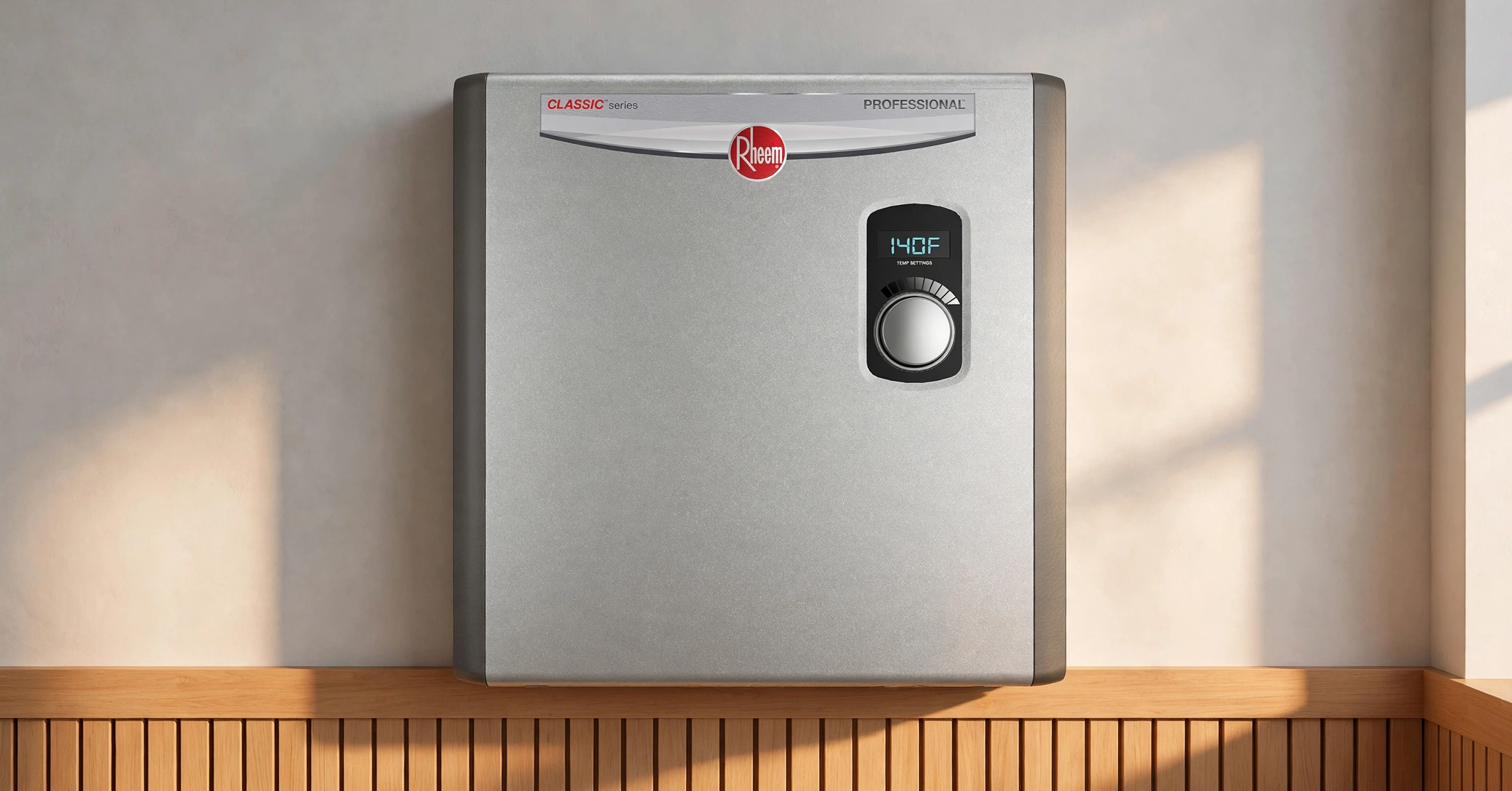
The Best Tankless Water Heater can provide convenient hot water while saving space compared with traditional storage-tank systems. The Rheem RTEX-24, Stiebel Eltron Tempra Plus, and Rinnai RXP199iN, offer different heating technologies and features to suit various household hot-water needs.
The Rheem RTEX-24 (Buy Amazon $549.00) is an electric tankless water heater designed for on-demand hot water. Its compact construction makes it suitable for homes looking to save installation space, while its adjustable temperature settings provide convenient control.
The Stiebel Eltron Tempra Plus (Buy Amazon $799.00) is another electric option featuring advanced temperature control technology. Its design helps maintain consistent hot-water delivery while adjusting power according to demand, making it a practical choice for modern households.
The Rinnai RXP199iN (Buy Amazon $2,067.80) is a high-efficiency condensing gas tankless water heater designed for substantial household hot water demands. Its advanced heating technology and indoor installation design make it suitable for families looking for dependable hot water throughout the day.
1. Rheem RTEX-24 Tankless Water Heater
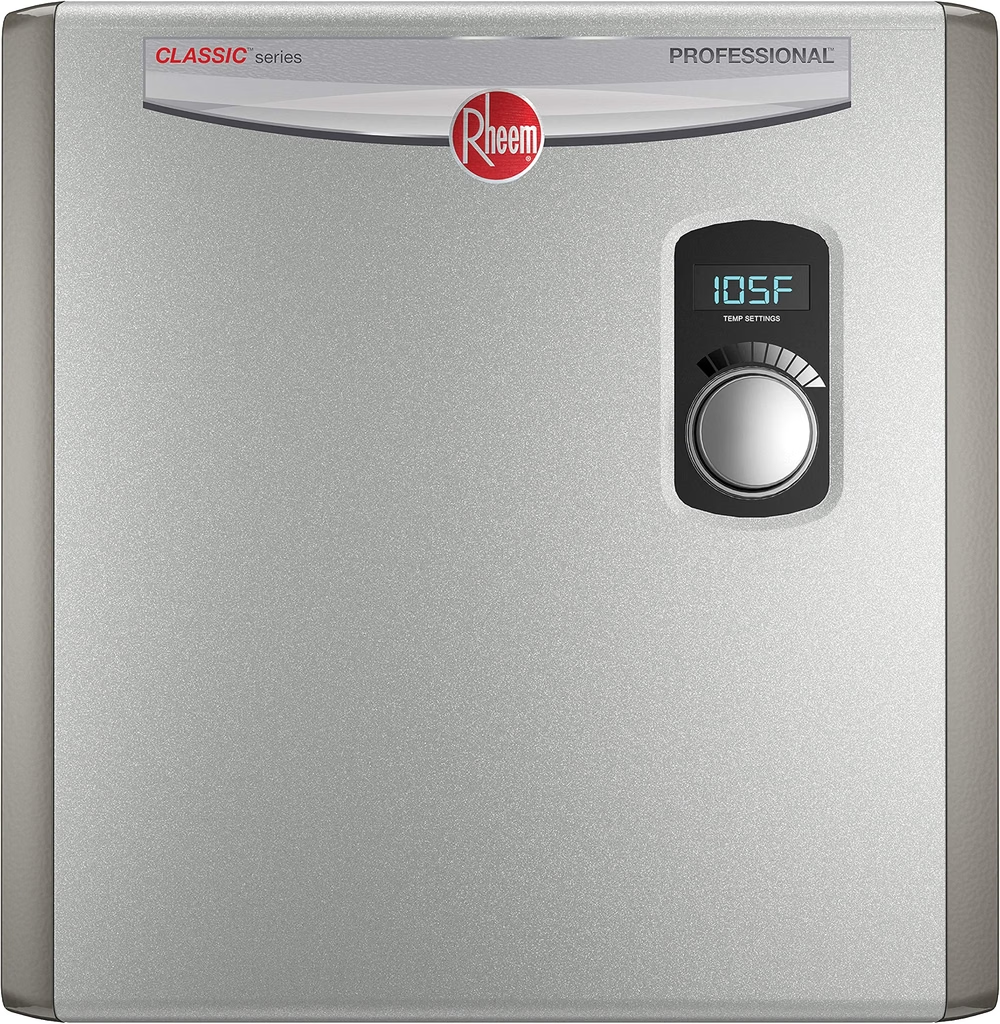
Rheem RTEX-24 Review – A Closer Look at Its On-Demand Heating Power, Energy Efficiency, & Space-Saving Design
Spacefications — Heating Capacity: 24 kW | Flow Rate: 5.9 GPM | Temperature Setting: 80°F–140°F | Operating Water Pressure: 25–150 PSI | Wattage: 24 KW | Voltage: 240 V | Dimensions: 3.5″D x 17.63″W x 18.25″H | Weight: 17.8 lbs.
Having dependable hot water is essential for everyday comfort. From taking showers and washing dishes to cleaning and preparing meals, a household relies on its water heater throughout the day. Traditional storage heaters keep a large quantity of water hot, but they can take up considerable space and eventually run out of stored hot water. The Rheem RTEX-24 Electric Tankless Water Heater offers a different approach by heating water as it flows through the unit.
Designed for residential use, this model combines an on-demand heating system with digital temperature controls and a compact wall-mounted design. It is intended to provide a continuous supply of hot water when properly sized and installed for the home’s water demand. Its tankless construction also eliminates the need to maintain a large storage tank.
This review explores the RTEX-24’s design, heating performance, temperature control, installation considerations, maintenance, and overall practicality. It is based on available manufacturer information rather than personal hands-on testing.
Compact Design and Space Savings
One of the most noticeable advantages of the Rheem RTEX-24 is its compact design. Traditional water heaters require room for a storage tank, which can occupy a substantial portion of a utility closet, garage, or basement. A tankless unit takes a different approach, using a relatively small enclosure that can be mounted on a suitable wall.
This design can free up valuable floor space and make a utility area feel less crowded. It may be particularly attractive to homeowners replacing an older storage heater or planning a renovation where available space is limited.
The unit has a clean, practical appearance rather than a decorative design. Its purpose is to fit into a utility area and operate without demanding unnecessary space. The enclosure is designed for residential environments, and the compact profile makes it easier to accommodate than many traditional tank-style systems.
However, compact dimensions should not be mistaken for simple installation. The RTEX-24 requires substantial electrical capacity, and the wall location must also allow access for plumbing connections and future maintenance.
On-Demand Hot Water Performance
The central benefit of the Rheem RTEX-24 is its ability to heat water as it passes through the unit. Rather than storing heated water in a tank, the system activates when water flows and uses electric heating elements to raise its temperature.
This approach can provide hot water continuously while demand remains within the heater’s operating capacity. It also avoids the familiar situation in which a storage tank becomes depleted after several showers or multiple household activities.
The RTEX-24 is designed for residential applications and can support more than one hot-water use when conditions are suitable. However, the actual number of fixtures it can serve simultaneously depends on incoming water temperature, desired outlet temperature, and total water flow.
This distinction is important. A tankless heater does not produce unlimited hot water at every possible flow rate. During colder seasons, incoming water may be significantly colder, requiring more energy to reach the selected temperature. As a result, the available flow of comfortably heated water may decrease.
For the best experience, homeowners should consider their household’s actual hot-water usage rather than relying only on the model name or advertised capacity.
Digital Temperature Control
The digital temperature control is another useful feature. It allows users to select a preferred hot-water setting and adjust it in small increments. This makes it easier to establish a comfortable temperature rather than relying on a less precise adjustment process.
The digital display also provides a convenient way to view the selected setting. Once the temperature has been chosen, the heater is designed to regulate its operation to maintain the desired outlet temperature under suitable operating conditions.
This level of control can be helpful in households where different activities require different water temperatures. For example, a comfortable shower setting may be different from the temperature preferred for washing dishes.
A properly selected temperature can also help reduce unnecessary heating. Users should follow the manufacturer’s recommendations and applicable plumbing safety guidance when choosing a setting, especially in homes with children, older adults, or people sensitive to hot water.
Energy Efficiency and Everyday Use
Tankless water heaters are designed to heat water only when needed, which can reduce the standby heat losses associated with storing hot water in a conventional tank. The Rheem RTEX-24 is promoted as a high-efficiency electric model, making it worth considering for homeowners interested in a more demand-based heating system.
Its operation can be particularly appealing when household hot-water use is spread throughout the day rather than concentrated in a short period. Because there is no large tank continuously maintaining a supply of hot water, the system avoids some of the energy losses associated with storage.
However, actual savings depend on several factors, including electricity prices, incoming water temperature, household consumption, existing heater efficiency, and usage habits. A tankless model is not automatically less expensive to operate in every home.
The RTEX-24 also uses a substantial amount of electrical power while heating water. Its efficiency should therefore be considered alongside the home’s electrical capacity and the cost of operating a high-demand electric appliance.
Installation and Electrical Requirements
Installation is one of the most important considerations when evaluating this model. Unlike a small point-of-use heater, the RTEX-24 requires a dedicated, high-capacity electrical arrangement. Rheem’s documentation identifies a 240-volt supply, a total current demand of approximately 100 amps, three double-pole 40-amp breakers, and a recommended household electrical service panel capacity of 200 amps.
These requirements mean that the heater may not be a straightforward replacement for an existing storage water heater. Some homes may require electrical upgrades before installation is possible. The wiring, breaker arrangement, and available service capacity must be checked by a qualified electrician.
The plumbing connections also need to match the manufacturer’s instructions. Proper pipe sizing, water pressure, isolation arrangements, and secure connections are important for dependable operation.
Although the compact unit may appear easy to mount, the electrical demands make professional installation strongly advisable. A qualified electrician and plumber can evaluate whether the home’s infrastructure is suitable and ensure that the installation follows local codes.
Homeowners should confirm compatibility before purchasing rather than discovering afterward that the electrical panel requires expensive modifications.
Maintenance and Long-Term Care
The Rheem RTEX-24 is designed without a storage tank, which removes some maintenance concerns associated with traditional tank-style heaters. There is no large tank to inspect for accumulated sediment or storage-related corrosion in the same way.
Nevertheless, tankless systems still require appropriate care. Mineral deposits can accumulate inside the heating chambers, especially in areas with hard water. Periodic flushing or descaling may be necessary according to the manufacturer’s maintenance instructions and local water conditions.
Keeping the water supply clean and following recommended service intervals can help protect the heating elements and maintain performance. It is also sensible to have plumbing connections and electrical components inspected when necessary.
Homeowners should avoid attempting internal electrical repairs without the proper training. Because the unit operates with high electrical demand, servicing should be handled by qualified professionals.
Advantages and Possible Limitations
The strongest advantages of the RTEX-24 are its compact design, on-demand heating approach, digital temperature adjustment, and potential to provide continuous hot water within its capacity. It eliminates the need for a large storage tank and can free up useful floor space.
Its electric operation also means that it does not require gas combustion or a flue for exhaust ventilation. This can simplify certain installation arrangements compared with gas-fired tankless systems.
However, the electrical requirements are a major consideration. The high current demand may require substantial upgrades in homes without sufficient electrical capacity. Its performance is also affected by incoming water temperature and simultaneous hot-water demand. In colder climates, available flow may be lower than expected.
The initial installation cost should therefore be evaluated alongside the purchase price. Buyers should also consider local electricity costs and the availability of qualified service professionals.
Verdict
The Rheem RTEX-24 Electric Tankless Water Heater is a compact residential heating solution designed for homeowners who want on-demand hot water without maintaining a large storage tank. Its digital temperature controls, space-saving construction, and tankless operating design make it an appealing alternative to traditional electric storage heaters.
Its biggest strength is the ability to provide hot water continuously within its heating capacity. The lack of a storage tank also frees up space and avoids standby losses associated with keeping a large volume of water hot.
The main concern is its demanding electrical installation. A suitable electrical panel, correctly sized wiring, and professional installation are essential. Buyers should also evaluate household water demand and incoming water temperature to determine whether the unit can comfortably serve their needs.
Overall, the Rheem RTEX-24 is worth considering for homes with the electrical infrastructure and hot-water requirements to support it. Careful planning before purchase is the key to getting the best experience from this tankless water heater.
2. Stiebel Eltron Tempra Plus Tankless Water Heater
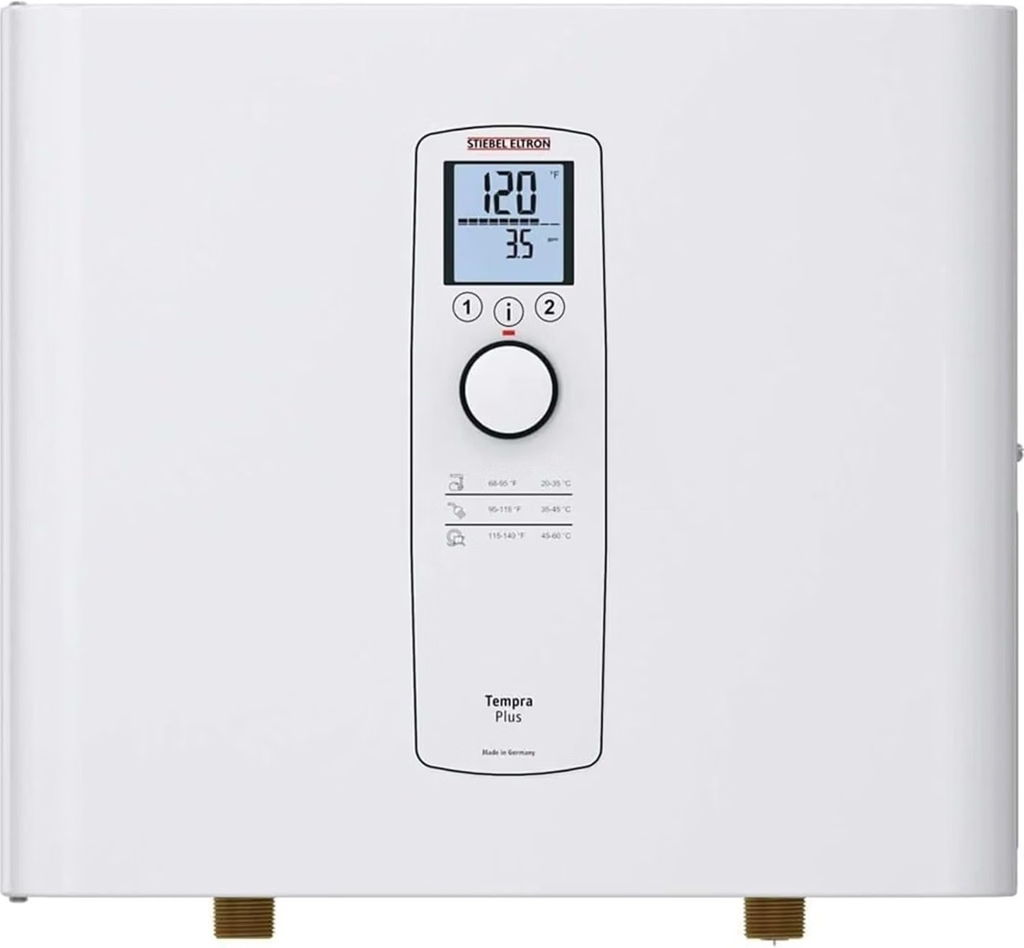
Stiebel Eltron Tempra 29 Plus Review – Exploring Its Heating Performance, Energy Efficiency, & Advanced Tankless Technology
Spacefications — Heating Capacity: 98,350.75 BTU | Flow Rate: 4.5 GPM | Temperature Setting: 86°F–140°F | Operating Water Pressure: 30–150 PSI | Wattage: 28.8 KW | Voltage: 240 V | Dimensions: 4.625″D x 16.625″W x 14.5″H | Weight: 19 lbs.
A dependable hot water supply is essential for comfortable everyday living. From taking showers and washing dishes to cleaning and preparing meals, households need a water heater that can respond to changing demands without unnecessary delays. Traditional storage heaters keep a tank full of hot water, but they require space and can eventually run out when several people use hot water close together. The Stiebel Eltron Tempra 29 Plus offers a different approach with an electric tankless design that heats water as it flows through the unit.
This model is designed for homeowners who want an efficient, compact alternative to a conventional storage water heater. Its electronic temperature control, advanced flow management, and space-saving construction make it an interesting option for residential applications. Rather than maintaining a large quantity of heated water, it activates when hot water is needed.
This review explores its design, heating performance, temperature control, installation requirements, maintenance, and overall practicality. It is based on manufacturer and retailer information rather than personal hands-on testing.
Compact Design and Space Efficiency
One of the most attractive features of the Tempra 29 Plus is its compact construction. Traditional water heaters can occupy a considerable amount of space, particularly in utility rooms, garages, and smaller homes. A tankless unit removes the need for a large storage cylinder, allowing homeowners to use the available space more effectively.
The Tempra 29 Plus has a clean, functional appearance intended for installation in a utility area rather than as a decorative household appliance. Its wall-mounted design keeps the floor underneath clear and can make a crowded installation area easier to organize.
The compact body also makes it a potential option for replacement projects where homeowners want to move away from a conventional tank. However, its small size should not be mistaken for simple installation. This is a powerful electric appliance that requires suitable wiring, circuit protection, and professional assessment before it can be installed safely.
On-Demand Hot Water Performance
The main purpose of the Tempra 29 Plus is to provide hot water on demand. Instead of storing heated water, it uses electric heating elements to raise the temperature as water passes through the heater.
This approach can provide a continuous supply of hot water as long as the demand remains within the unit’s heating capacity. It can be useful for households that dislike running out of hot water after consecutive showers or during busy periods when several fixtures are used.
However, tankless technology does not mean unlimited hot water at every flow rate. The heater must raise incoming water to the selected temperature, and colder incoming water requires more heating energy. Consequently, the amount of hot water available at a comfortable temperature depends on the incoming water temperature and the total flow being requested.
For example, a household in a colder region may experience less available flow than a household receiving warmer groundwater. This is an important consideration when deciding whether the Tempra 29 Plus is suitable for a particular home.
Advanced Flow Control
A notable feature of the Tempra 29 Plus is its Advanced Flow Control technology. This system is designed to help maintain the selected hot-water temperature when household demand becomes greater than the heater can comfortably support.
Rather than allowing the outlet temperature to drop significantly, the system can reduce the water flow to help preserve the desired temperature. This is useful because an uncomfortable change in water temperature can be frustrating during a shower or while washing dishes.
The feature is particularly relevant in homes where more than one hot-water fixture may operate at the same time. If demand increases, the heater can prioritize temperature consistency instead of simply allowing the water to become cooler.
There is an important trade-off: maintaining temperature may mean receiving less water flow. Users may notice reduced flow when several fixtures are operating simultaneously or when incoming water is especially cold. Understanding this behavior helps establish realistic expectations.
Electronic Temperature Control
The Tempra 29 Plus includes electronic temperature regulation designed to provide accurate and consistent adjustment. Users can select a preferred hot-water temperature rather than relying on a traditional mechanical control.
This is convenient for households where different activities require different temperature settings. A comfortable shower temperature may differ from the setting preferred for cleaning or other household tasks.
Electronic regulation also helps the heater respond to changing operating conditions. When water demand changes, the system adjusts its heating operation to maintain the selected temperature within its operating limits.
The ability to select a consistent setting can make everyday use more comfortable. It also reduces the need for repeated manual adjustments at individual taps, although users should still follow recommended temperature and anti-scalding guidance.
Energy Efficiency and Operating Costs
Tankless water heaters are designed to heat water only when required. Because the Tempra 29 Plus does not maintain a large tank of hot water, it avoids the standby heat losses associated with continuously storing heated water.
This can be beneficial for households interested in reducing unnecessary energy consumption. The unit operates when hot water flows through it, rather than continually reheating stored water throughout the day.
Nevertheless, actual energy savings depend on household usage, electricity prices, incoming water temperature, and the efficiency of the existing water heater. A tankless system is not automatically less expensive to operate in every home.
The Tempra 29 Plus also uses substantial electrical power while heating water. Its operating cost should therefore be considered alongside local electricity rates and the household’s daily hot-water demand. Comparing the expected running cost with the existing system can provide a more realistic picture of long-term value.
Installation and Electrical Requirements
Installation is one of the most important considerations when purchasing the Tempra 29 Plus. This is a high-demand electric tankless water heater, and it requires a properly designed electrical supply.
The model is designed for a 240-volt electrical connection and requires multiple dedicated circuits. Its installation commonly calls for a substantial electrical service capacity, appropriately sized wiring, and correctly rated circuit breakers. The exact requirements must be confirmed using the current manufacturer’s installation manual and local electrical codes.
Some homes may need electrical panel upgrades or additional wiring before the unit can be installed. This can significantly affect the total project cost, so buyers should not evaluate the purchase price alone.
The plumbing connections must also be installed correctly. Water pressure, pipe sizing, isolation valves, and the condition of existing plumbing can all affect performance. A qualified electrician and plumber should assess the installation before purchase whenever possible.
Although the compact design makes the unit relatively easy to position physically, its electrical requirements make professional installation strongly advisable. Incorrect wiring or unsuitable circuit protection can create serious safety risks.
Maintenance and Long-Term Reliability
The Tempra 29 Plus avoids some maintenance concerns associated with large storage tanks, but it still needs appropriate care. Mineral deposits can accumulate inside the heating system, particularly in areas with hard water. Depending on local water conditions, periodic descaling or flushing may be necessary.
Following the manufacturer’s maintenance recommendations can help preserve heating performance and reduce the risk of mineral buildup interfering with operation. The water connections should also be checked periodically for leakage or signs of corrosion.
Because this unit uses high-powered electrical components, internal servicing should be performed by qualified professionals. Homeowners should not attempt electrical repairs without suitable training and equipment.
Keeping the surrounding installation area accessible also makes inspections and maintenance easier. A well-planned installation can contribute significantly to long-term convenience.
Advantages and Possible Limitations
The Stiebel Eltron Tempra 29 Plus offers several appealing advantages. Its compact design saves space, while its tankless operation provides hot water on demand within its capacity. Advanced Flow Control helps maintain the selected temperature when demand increases, and electronic regulation provides convenient adjustment.
Its lack of a storage tank also avoids standby heat losses associated with conventional tank systems.
However, the model has important limitations to consider. Its electrical demand is substantial, and some homes may require expensive electrical upgrades. Its available hot-water flow depends on incoming water temperature and simultaneous demand. When the system reduces flow to maintain temperature, users may notice less water coming from the fixture.
The initial installation expense, local electricity costs, and availability of qualified service professionals should all be considered before purchasing.
Verdict
The Stiebel Eltron Tempra 29 Plus is a powerful electric tankless water heater designed for homeowners who want a compact alternative to traditional hot-water storage systems. Its on-demand heating approach, electronic temperature regulation, and Advanced Flow Control technology make it an attractive option for households with suitable electrical infrastructure.
Its strongest benefit is the ability to provide hot water continuously within its operating capacity while helping maintain a consistent outlet temperature as demand changes. The compact wall-mounted design also makes it appealing where floor space is limited.
The main consideration is installation. Its substantial electrical requirements mean that professional assessment is essential, and some homes may need upgrades before the heater can operate safely. Buyers should also evaluate incoming water temperature and household demand to determine whether the available flow will meet their expectations.
Overall, the Tempra 29 Plus is worth considering for a properly equipped home seeking an efficient, space-saving electric tankless water heating solution. Careful planning and professional installation are essential to getting the best long-term experience.
3. Rinnai RXP199iN Tankless Water Heater
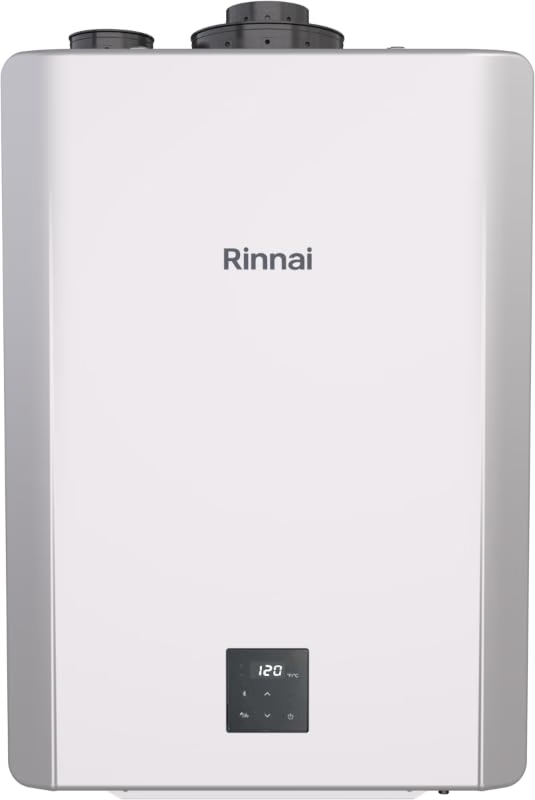
Rinnai RXP199iN Review – Exploring Its High-Efficiency Heating, Smart Technology, and Reliable On-Demand Hot Water Performance
Spacefications — Heating Capacity: 199,000 BTU/H | Flow Rate: 11 GPM | Temperature Setting: 98°F–140°F | Operating Water Pressure: 15–150 PSI | Wattage: 98 W | Voltage: 120 V | Dimensions: 11.4″D × 18.5″W × 30.11″H | Weight: 58 lbs.
A dependable hot-water system can make a significant difference in everyday household comfort. From taking showers and washing dishes to handling laundry and cleaning, families rely on hot water throughout the day. Traditional storage heaters keep water in a tank until it is needed, but this approach takes up space and can waste energy maintaining stored water at a desired temperature. Tankless water heaters offer another option by heating water as it flows through the appliance.
The Rinnai RXP199iN Condensing Tankless Water Heater is designed for homeowners who want an efficient, space-saving solution with additional convenience features. Part of Rinnai’s SENSEI RXP series, this model combines on-demand heating with an integrated recirculation pump. Its design aims to reduce waiting time for hot water while providing a more flexible experience for households with regular hot-water demand.
What makes this model particularly interesting is that it goes beyond basic tankless heating. Its intelligent recirculation technology, compact construction, and flexible installation options make it a feature-rich choice. However, it also requires careful planning, professional installation, and appropriate maintenance. This review explores its everyday usefulness, performance, design, installation, and overall value without focusing on a technical specifications list.
Design and Build Quality
The Rinnai RXP199iN has a modern, compact design that makes it easier to accommodate than a traditional storage water heater. Its wall-mounted construction frees up floor space and can be especially helpful in homes with limited utility-room space. The clean exterior and straightforward appearance also make it suitable for installations where a large conventional tank would be inconvenient.
Although the unit is compact, its design is focused on practical functionality. The internal heating system, controls, and recirculation components are arranged to support regular household operation. Rinnai’s emphasis on durable heat-transfer components is another positive aspect, particularly for homeowners planning to use the appliance over many years.
The product can be installed indoors with suitable venting arrangements. Outdoor installation is also possible with the appropriate Versa-Vent accessory. This flexibility gives homeowners more options when planning a replacement or a new installation. Nevertheless, the installation location must meet the manufacturer’s requirements, and buyers should confirm which accessories are included in the package.
On-Demand Heating Performance
The primary benefit of the RXP199iN is its ability to heat water when it is needed. Instead of storing a large volume of heated water, the system activates when a hot-water tap or fixture creates demand. This can make daily routines more convenient because users do not have to depend on a tank that may become depleted after several consecutive showers.
For households with multiple bathrooms, kitchen activities, and regular hot-water use, a properly sized tankless system can provide a more consistent supply than a small storage tank. However, actual performance depends on incoming water temperature, desired output temperature, water pressure, and the number of fixtures operating simultaneously.
The RXP199iN is designed for substantial residential demand, but its advertised maximum flow should not be interpreted as a guarantee that every household fixture can operate at full flow at the same time. Colder incoming water requires more heating, which can reduce available flow. Homeowners should therefore have their expected peak demand evaluated before choosing this model.
When correctly matched to a property’s needs, the system can provide a convenient hot-water experience without the limitations associated with a finite storage tank.
Intelligent Recirculation Convenience
One of the most appealing features of the RXP199iN is its integrated recirculation pump. In many homes, users must allow water sitting in the pipes to run out before hot water reaches a distant faucet. This waiting period can be frustrating and may result in unnecessary water waste.
The built-in pump works with Rinnai’s Smart-Circ intelligent recirculation technology to help make hot water available more quickly. Rather than treating recirculation as an entirely separate upgrade, this model includes the pump as part of its design. The system can learn household usage patterns and manage circulation to improve convenience.
This feature may be particularly useful in larger homes where bathrooms and kitchens are located far from the water heater. Shorter waiting times can make morning routines easier and reduce the amount of water that would otherwise flow down the drain while waiting for it to become warm.
However, the actual benefit depends on the home’s plumbing arrangement and how the recirculation system is configured. Buyers should discuss the available circulation setup with their installer to make sure it suits the existing plumbing.
Energy Efficiency and Operating Value
Condensing technology is another important advantage of this model. A condensing water heater is designed to recover additional heat from combustion exhaust rather than allowing as much useful energy to escape. Combined with on-demand heating, this approach can help reduce wasted energy compared with less efficient heating arrangements.
Because the appliance does not continually maintain a large tank of stored hot water, it can also avoid much of the standby heat loss associated with conventional storage systems. This does not mean every household will automatically see a dramatic reduction in utility bills. Actual savings depend on fuel prices, household consumption, existing equipment, installation quality, and usage habits.
The RXP199iN is designed to operate with natural gas or propane, subject to the correct setup and manufacturer instructions. This flexibility can be useful when household fuel requirements change, but any conversion must follow Rinnai’s approved procedure and should be completed by a qualified professional.
For buyers considering long-term value, energy efficiency should be evaluated alongside installation expenses, maintenance requirements, and local fuel costs.
Installation and Setup
The RXP199iN is a sophisticated gas appliance, so installation should not be treated as a casual do-it-yourself project. It requires appropriate gas connections, water connections, electrical power, drainage for condensate, and a correctly designed venting arrangement.
The condensing design produces condensate that must be drained properly. Venting materials and installation methods must also comply with the manufacturer’s instructions and local building requirements. Incorrect installation can affect performance, reliability, and household safety.
A qualified installer should inspect the gas supply, plumbing layout, venting route, and proposed mounting location before work begins. The professional should also explain how the recirculation feature will work with the home’s plumbing system.
Although the product offers installation flexibility, additional accessories may be needed depending on whether the unit is installed indoors or outdoors. Buyers should confirm these requirements before ordering to avoid unexpected expenses.
Ease of Use and Smart Features
The RXP199iN is designed to make everyday hot-water management relatively straightforward. Its control interface allows users to manage operating settings and monitor the system. The intelligent recirculation feature also reduces the need for users to think constantly about when hot water will arrive.
Wi-Fi-related functionality is available through compatible accessories, so buyers interested in remote monitoring should verify the required equipment and its availability. It is important not to assume that every smart feature is ready to use straight out of the box.
Once professionally installed and configured, the appliance is intended to operate automatically as household demand changes. This makes it suitable for people who prefer a modern heating system without having to manage a conventional storage tank.
Maintenance and Long-Term Reliability
Regular maintenance is important for keeping a condensing tankless water heater working properly. Mineral deposits can build up inside the water passages, especially in areas with hard water. Periodic flushing or descaling may be necessary to protect performance and reduce the risk of internal damage.
The condensate drainage system should also be checked, while the venting arrangement and surrounding installation area should remain clear and unobstructed. Homeowners should follow Rinnai’s maintenance guidance and arrange professional servicing when required.
The integrated pump adds convenience, but it is also another component that should be inspected as part of routine maintenance. Taking care of the system can help preserve reliable operation over time.
Advantages and Limitations
The Rinnai RXP199iN offers several meaningful advantages. Its compact design saves space, its condensing technology supports efficient operation, and its built-in recirculation pump can reduce waiting time for hot water. Flexible installation options and compatibility with different fuel arrangements add further appeal.
There are also limitations to consider. The purchase and installation costs may be higher than those of simpler water heaters. Professional installation is essential, and additional accessories may be required. Performance still depends on household demand and incoming water conditions. Maintenance is also necessary to protect the appliance over its service life.
Verdict
The Rinnai RXP199iN Condensing Tankless Water Heater is a strong option for homeowners looking for a modern, feature-rich alternative to traditional tank-based heating. Its combination of on-demand heating, condensing technology, and integrated intelligent recirculation makes it particularly appealing for households that value convenience and efficient use of energy.
Its greatest strength is the way it combines several useful features into one compact system. The recirculation pump can improve everyday comfort, while the tankless design frees up space and avoids continuously heating stored water.
However, it is not a simple replacement that can be installed without planning. Buyers should evaluate their household demand, fuel supply, plumbing layout, venting requirements, and installation budget before making a decision.
Overall, the Rinnai RXP199iN is worth considering for homeowners who want a high-performance residential water-heating system with added convenience features. When properly sized, professionally installed, and regularly maintained, it can be a practical long-term investment in everyday household comfort.
