
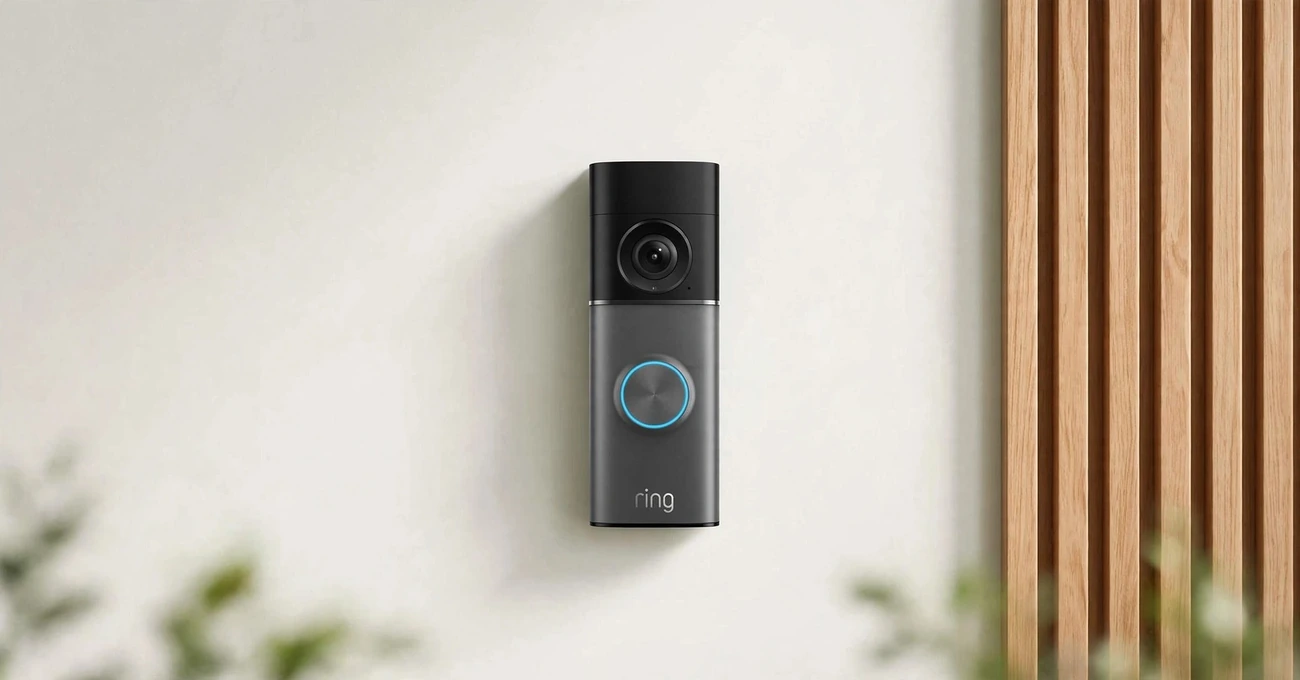
The Best Doorbell Camera can provide convenient front-door monitoring, visitor alerts, and two-way communication. The Ring Wired Doorbell Pro 3rd Gen, Ring Battery Doorbell Pro 2nd Gen, and Google Nest Doorbell Wired 3rd Gen, offer different installation options and smart-home features for modern households.
The Ring Wired Doorbell Pro 3rd Gen (Buy Amazon $249.99) is designed for homes with compatible wired connections. Its continuous power source makes it suitable for users who prefer a permanent installation. It also works with the Ring ecosystem, allowing homeowners to manage doorbell activity alongside other compatible devices.
The Ring Battery Doorbell Pro 2nd Gen (Buy Amazon $249.99) provides more installation flexibility because it operates with a rechargeable battery. This makes it useful for locations where running new wiring may be inconvenient. Users can receive notifications, view visitors, and communicate through the Ring app.
The Google Nest Doorbell Wired 3rd Gen (Buy Amazon $199.00) is a wired option designed to integrate with Google Home. It provides convenient video monitoring, visitor notifications, and app-based access, making it appealing to households already using Google smart-home products.
1. Ring Wired Doorbell Pro 3rd Gen
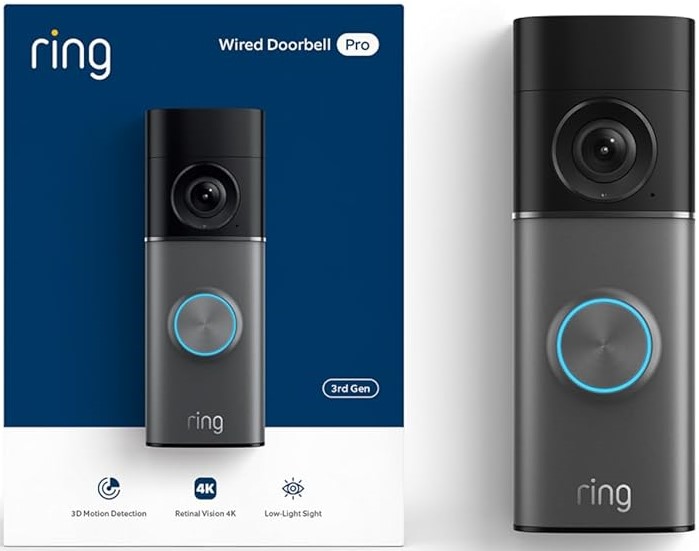
Ring Wired Doorbell Pro 3rd Gen Review
Spacefications — Video: 4K | Field of View: 140° H × 140° V | Connectivity: Wi-Fi 6, Dual-Band 2.4/5 GHz | Power: 16–24V AC / 24V DC 12W | Recording: 24/7 Recording Supported | Dimensions: 4.95 cm x 2.6 cm x 13.84 cm | Weight: 0.48 lbs.
The Ring Wired Doorbell Pro (3rd Gen) is a premium smart doorbell designed to provide clearer video, smarter motion detection, and convenient communication with visitors. Now marketed as the Ring Wired Doorbell 4K Pro, this third-generation model introduces a 4K camera alongside advanced motion detection, improved night vision, and Wi-Fi 6 connectivity.
Its standout features include Retinal 4K video, 10× Enhanced Zoom, radar-powered 3D Motion Detection, and two-way communication with Audio+. Unlike battery-powered alternatives, it uses a hardwired power connection, making it suitable for homeowners who prefer continuous operation without regular battery charging.
For households looking to improve front-door security and package monitoring, this doorbell combines high-resolution video with useful smart-home features.
4K Video Quality and Enhanced Zoom
The biggest improvement is the Retinal 4K camera, which records at 2880 × 2880 pixels. Its square 1:1 aspect ratio is particularly useful for a doorbell because it captures both visitors and the area near the doorstep.
This design helps address a common limitation of conventional wide-angle cameras: showing a person’s face while cutting off packages positioned below the camera. The square image provides a more balanced view of the entrance.
The camera also supports up to 10× Enhanced Zoom, allowing users to enlarge portions of the video when examining visitors, deliveries, and other details. The higher resolution provides more image information for digital enlargement, although results still depend on distance, lighting, and the original image quality.
For homeowners who frequently receive deliveries, this combination of resolution and zoom can make recorded footage more useful when reviewing activity at the door.
Head-to-Toe Coverage
The doorbell features a 140-degree horizontal and 140-degree vertical field of view, providing a broad view around the entrance.
Its square format helps capture a visitor’s upper body while retaining visibility of the doorstep. This is particularly helpful for monitoring parcels, delivery bags, and other objects left near the door.
The viewing angle also helps homeowners understand what is happening around their entrance without relying entirely on multiple cameras. However, the actual coverage depends on mounting height, doorway layout, and nearby obstacles.
Correct installation is therefore important. Positioning the camera thoughtfully can improve visibility of both approaching visitors and the area where deliveries are typically placed.
Radar-Powered 3D Motion Detection
The 3D Motion Detection system uses radar to help identify movement more precisely than basic image-based detection alone.
This allows users to configure motion zones and focus alerts on relevant areas around their property. For example, homeowners may want notifications when someone approaches the front entrance but fewer alerts when pedestrians pass along a nearby sidewalk.
Reducing unnecessary notifications can make a smart doorbell more practical in everyday use. Instead of responding to every movement in the wider scene, users can tailor monitoring to their property’s layout.
Motion detection is still influenced by installation, surroundings, and settings, so some adjustment may be necessary after setup. Nevertheless, radar-assisted detection is an important feature for people who want more control over security alerts.
Improved Night Vision
Nighttime monitoring is another important part of the doorbell’s design. Ring combines Night Vision, Low-Light Sight, and Adaptive Night Vision to help maintain useful visibility in changing lighting conditions.
Low-Light Sight is intended to preserve color information in very dark environments, while Adaptive Night Vision adjusts when conditions become darker. This is useful for entrances where outdoor lighting varies throughout the evening.
Clear nighttime footage can help users identify visitors and review activity after dark. However, performance depends on surrounding light, distance, and installation conditions.
Choosing a suitable mounting position and maintaining a clear camera lens can help the system capture more useful footage.
Audio+ Two-Way Communication
The doorbell includes two-way talk with Audio+, allowing homeowners to speak with visitors through the Ring app.
This feature is useful for communicating delivery instructions, answering the door while away, or asking an unexpected visitor to identify themselves. It can also help when someone arrives while the homeowner is occupied elsewhere in the house.
Audio quality depends on background noise, wind, distance, and network conditions. Even so, having communication integrated into the doorbell means users do not need a separate intercom to speak with someone at the entrance.
Combined with live video, two-way audio makes it easier to understand what is happening at the door and respond appropriately.
Wi-Fi 6 Connectivity
The Ring Wired Doorbell Pro supports dual-band Wi-Fi 6 connectivity, including 2.4GHz and 5GHz networks.
This is important because transmitting high-resolution video places demands on a home’s wireless connection. The 2.4GHz band generally offers greater range, while 5GHz can provide higher throughput when the router is sufficiently close.
Ring recommends an upload speed of at least 15 Mbps for its 4K devices, although actual performance depends on network conditions.
Before installation, check the Wi-Fi signal at the intended mounting location. A strong, stable connection helps support reliable notifications, live viewing, and video transmission.
Hardwired Power and Installation
Unlike battery-powered Ring doorbells, this model is designed for continuous electrical power. Compatible options include an appropriate existing doorbell system, a Ring plug-in adapter, or a suitable hardwired transformer.
The supported power requirements include 16 or 24VAC at 10–40VA, with 30–40VA recommended for optimal performance, or 24VDC at 12W.
The main advantage is that there is no battery to recharge. This is particularly convenient for a high-resolution camera that may be used frequently for live viewing and motion monitoring.
The tradeoff is installation flexibility. Homeowners need compatible wiring or an appropriate power solution, and existing transformers should be checked before installation. Follow Ring’s installation instructions and applicable electrical safety requirements.
Ring App and Smart-Home Integration
The Ring app serves as the central interface for live video, motion settings, alerts, and connected devices. Users can customize motion zones and manage supported features from their phone.
The doorbell can also work with compatible Ring and Alexa devices, allowing notifications to be heard or displayed elsewhere in the home. Features such as Quick Replies and Doorbell Calls add further convenience, depending on compatibility and availability.
These integrations are particularly useful for households already using Ring cameras or Alexa-enabled devices. However, the overall experience depends on the connected ecosystem, network reliability, and selected settings.
Ring Protect Subscription
One important consideration is the Ring Protect subscription.
Live View and real-time notifications provide basic monitoring capabilities, but extended video history and certain intelligent features require an eligible subscription plan. Available features and storage periods depend on the plan and region.
This distinction matters because buyers may expect every advertised software feature to be included with the hardware. Anyone who wants to review older recordings or use additional recognition tools should check the current plan details and recurring costs before purchasing.
The subscription is less central for users who mainly want live viewing and alerts, but it becomes more important for those who depend on stored footage for reviewing past events.
Weather Resistance and Design
The doorbell is designed for outdoor use and is rated for operating temperatures from approximately –4°F to 120°F. Its weather-resistant construction supports installation at exposed entrances, although the location still matters.
Prolonged direct sunlight can increase the device’s temperature, so a partially sheltered mounting position may be preferable where practical.
The device measures approximately 5.45 inches high, 1.95 inches wide, and 1.02 inches deep. Available finishes include Deep Silver, Polished Night Navy, Polished Mocha, and Polished Sandstone, depending on availability.
The included accessories include a mounting plate, Corner Kit, installation tools and hardware, Chime Kit Mini, setup guide, and security sticker. The Corner Kit can help angle the camera toward a walkway or approach.
Verdict
The Ring Wired Doorbell Pro (3rd Gen) is a feature-rich smart doorbell designed for homeowners who prioritize detailed video, precise motion alerts, and continuous wired operation.
Its 2880 × 2880 4K camera, 10× Enhanced Zoom, 3D Motion Detection, adaptive night vision, Audio+, and Wi-Fi 6 combine to provide a comprehensive front-door monitoring system. The square viewing format is particularly useful for seeing visitors and packages in the same frame.
Its main considerations are the need for compatible wiring, a strong Wi-Fi connection, and a potential ongoing subscription cost for extended recordings and advanced features.
Overall, this Ring doorbell is a compelling option for homeowners who want high-resolution front-door security with smart detection and convenient visitor communication. Its combination of 4K video, useful monitoring features, and hardwired power makes it a strong choice for a permanent smart-home security installation.
2. Ring Battery Doorbell Pro 2nd Gen
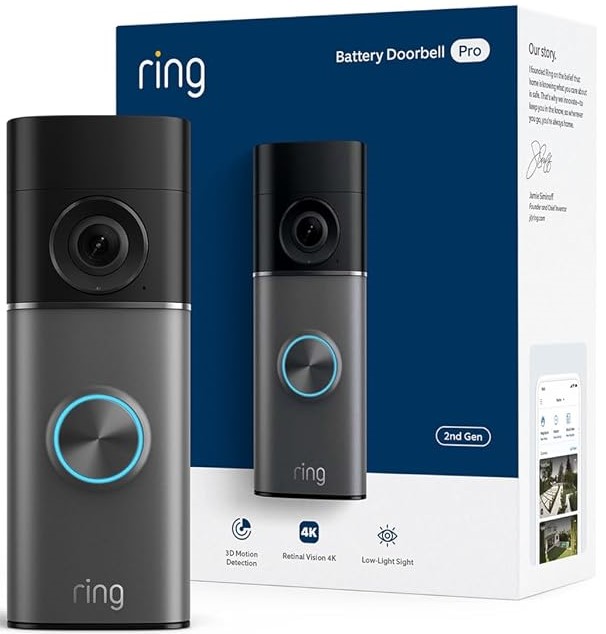
Ring Battery Doorbell Pro 2nd Gen Review
Spacefications — Video: 1536p HD+| Field of View: 140° H × 140° V | Connectivity: Wi-Fi 6 (802.11ax), dual-band 2.4 GHz / 5 GHz | Power: 8–24V AC, 40VA Max, 50/60Hz | Recording: Up to 180 Days History | Dimensions: 5.36 cm x 14.7 cm x 3.84 cm | Weight: 0.71 lbs.
The Ring Battery Doorbell Pro (2nd Gen) is designed for homeowners who want advanced front-door security without depending entirely on permanent doorbell wiring. Featuring Retinal 4K video, up to 10× Enhanced Zoom, radar-based motion detection, and a removable battery pack, it combines detailed monitoring with flexible installation. Ring now markets this model as the Battery Doorbell 4K Pro, retaining the hardware and feature set associated with the second-generation Battery Doorbell Pro.
The doorbell is intended to help homeowners identify visitors, monitor deliveries, and review activity around their entrances through the Ring app. Its battery-powered design suits properties where installing new wiring would be inconvenient, while compatible existing wiring provides an alternative for keeping the battery charged. Although subscription costs and wireless connectivity deserve consideration, this model offers a comprehensive collection of security features.
Retinal 4K Video Quality
The standout feature is the Retinal 4K camera, which captures video at a square 2880 × 2880 resolution. Compared with lower-resolution doorbell cameras, this provides substantially more image information for examining visitors, packages, and activity near the entrance.
The square format is particularly practical because a doorbell needs to monitor both people standing upright and objects placed close to the ground. Instead of prioritizing only a wide horizontal view, the camera is designed to preserve useful vertical coverage around the doorstep.
Higher resolution also supports closer inspection of recorded footage. When a visitor approaches from farther away, additional image detail can help users examine clothing, facial features, or other visible characteristics. Actual clarity still depends on lighting, distance, movement, and network conditions, but the 4K sensor provides a strong foundation.
Enhanced Zoom and Head-to-Toe Coverage
Ring includes up to 10× Enhanced Zoom, allowing users to examine selected areas of the image more closely. This can be useful when checking a delivery left farther from the entrance or reviewing activity that initially appears small in the wider view.
Zoom is most effective when the original footage contains sufficient detail. Digital enhancement cannot recover information that the camera never captured, so results will vary with the subject’s distance and the recording conditions. Nevertheless, combining zoom with a high-resolution sensor offers greater flexibility than relying on a basic HD image.
The camera also provides a 140-degree horizontal and 140-degree vertical field of view. This supports head-to-toe coverage, helping users see visitors while retaining visibility of the area near their feet. That lower section matters when monitoring parcels, checking whether a delivery was left beside the door, or reviewing movement immediately outside the entrance.
Radar-Based 3D Motion Detection
The Battery Doorbell Pro uses radar-assisted 3D Motion Detection to provide additional context about movement around the property. Rather than relying exclusively on conventional image-based detection, the system uses radar information to help determine where activity occurs.
With Bird’s Eye View and Bird’s Eye Zones, compatible features can present an overhead representation of movement around the monitored area. This can help homeowners understand a visitor’s path and configure monitoring around a driveway, walkway, or front garden.
Customizing detection areas is especially useful for entrances near busy sidewalks. By concentrating alerts on relevant spaces, users can reduce unnecessary notifications caused by activity outside the area they want to monitor.
Motion detection is not infallible, however. Positioning, environmental conditions, and configuration can influence results. Taking time to establish suitable zones can make the system more useful in everyday situations.
Battery Design and Installation
One of the doorbell’s biggest advantages is its battery-powered operation. Homeowners can install it without necessarily running new doorbell wiring, making it suitable for properties where a wired installation would be difficult or expensive.
The Quick Release Ultra Battery Pack is designed to simplify maintenance. Rather than removing the entire doorbell from its mounting position to recharge it, users can remove the battery pack separately. Ring describes it as its fastest-charging battery yet, offering a more convenient approach to routine charging.
Compatible existing doorbell wiring can also be used to keep the battery charged. This flexibility allows buyers to choose an installation method that suits their home.
Battery life will vary according to motion frequency, recording settings, Live View usage, Wi-Fi strength, and temperature. Homes with frequent activity may require more regular charging than quieter entrances, so buyers should avoid assuming a single runtime will apply to every installation.
Night Vision and Low-Light Performance
Security monitoring should remain useful after sunset, and the doorbell includes night vision for monitoring visitors and movement in darker conditions. Its high-resolution imaging system supports detailed daytime footage, while night vision helps maintain visibility when natural light disappears.
Performance will depend on the environment. A doorway with porch lighting or nearby streetlights may produce different results from a completely dark walkway. Glare, shadows, and moving subjects can also affect nighttime recordings.
For the best results, homeowners should position the doorbell carefully and consider whether existing exterior lighting adequately illuminates the entrance. Night vision adds valuable around-the-clock monitoring, although it cannot guarantee perfect identification in every lighting condition.
Audio+ Two-Way Communication
The built-in Two-Way Talk feature with Audio+ allows users to communicate with visitors through the Ring app. Whether someone arrives with a delivery, asks a question, or visits while the homeowner is away, the doorbell makes remote communication possible.
This is useful for giving delivery instructions, asking a visitor to wait, or checking why someone is standing outside. It can also help homeowners respond without immediately opening the door.
Audio quality depends on environmental noise, wind, distance, and network performance. Even so, two-way communication adds practical convenience by combining video monitoring and visitor interaction within one device.
Wi-Fi 6 and Smart Connectivity
The doorbell supports Wi-Fi 6 and dual-band 2.4GHz and 5GHz connectivity. This provides flexibility when connecting to compatible home networks, although the best band depends on the distance between the doorbell and router.
The 2.4GHz band may provide better coverage over longer distances, while 5GHz can offer higher throughput when the signal is sufficiently strong. Since 4K video requires substantial bandwidth, a reliable connection is particularly important for smooth live viewing and dependable alerts.
Ring recommends an upload speed of at least 15 Mbps for its 4K devices. Homeowners should check Wi-Fi coverage at the entrance before installation because weak signals can affect performance even when the camera hardware is capable of high-resolution recording.
Through the Ring app, users can view live footage, receive notifications, communicate with visitors, and manage available settings. This connected experience makes the doorbell useful whether someone is working at home or checking activity while away.
Weather Resistance and Durability
The doorbell carries an IP55 weather-resistance rating, and its stated operating temperature range is approximately -4°F to 122°F (-20°C to 50°C). These characteristics make it suitable for outdoor monitoring across a range of environmental conditions.
Installation position still matters. A sheltered entrance may provide additional protection from direct rain and intense sunlight, while an exposed location can place more stress on the device. Correct mounting helps support reliable long-term operation.
Ring Protect and Subscription Features
Although the doorbell supports live viewing and real-time notifications, certain advanced features depend on an eligible Ring Protect subscription. These may include video history, Video Descriptions, Package Alerts, Single Event Alert, and other enhanced recording or notification capabilities, depending on the plan and region.
This distinction is important when evaluating overall value. Buyers who mainly want to see visitors live may have different needs from those who want to review saved footage or receive more advanced alerts.
Before purchasing, check the current subscription options and the features available in your region. Including potential recurring costs in the budget provides a more realistic picture of long-term ownership.
Design and Everyday Convenience
The doorbell measures approximately 5.78 inches high, 2.11 inches wide, and 1.43 inches deep with the wall mount. The package includes mounting hardware, a universal mounting plate, a corner kit, a faceplate, the Quick Release Ultra Battery Pack, and installation materials.
The corner kit can help angle the camera toward a walkway or approach when a straight-on position would not provide the preferred view. Together with battery-powered installation, these accessories make it easier to adapt the doorbell to different entrance layouts.
Verdict
The Ring Battery Doorbell Pro (2nd Gen), now marketed as the Battery Doorbell 4K Pro, is a feature-rich choice for homeowners seeking detailed front-door monitoring without requiring a fully wired installation. Its Retinal 4K camera, 10× Enhanced Zoom, head-to-toe coverage, radar-assisted motion detection, night vision, and Audio+ communication work together to provide a comprehensive security experience.
The removable battery pack adds installation flexibility, while Wi-Fi 6 supports the connectivity needed for high-resolution video. Its main considerations are variable battery life, the need for dependable Wi-Fi, and subscription costs for certain advanced features.
For homeowners who prioritize image detail, useful motion alerts, and convenient remote communication, this doorbell offers a sophisticated upgrade over basic video doorbells. Its combination of flexible power options and advanced monitoring makes it a strong option for keeping an eye on visitors, deliveries, and activity around the front entrance.
3. Google Nest Doorbell (Wired, 3rd Gen)
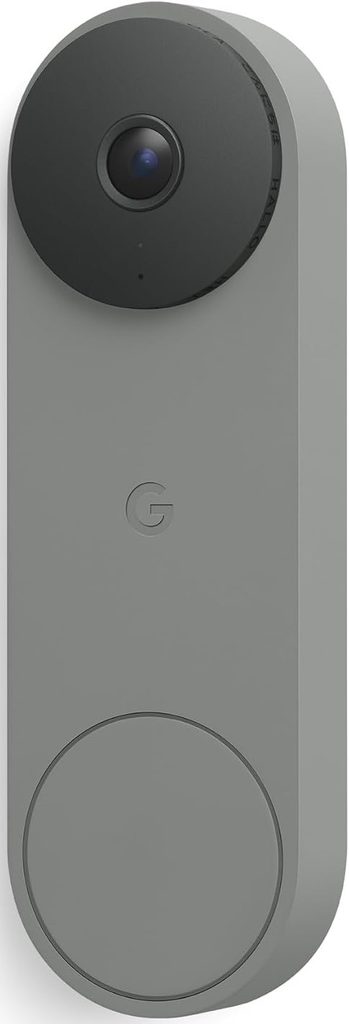
Google Nest Doorbell Wired 3rd Gen Review
Spacefications — Video: 2K HDR | Field of View: 166° | Connectivity: Dual-Band Wi-Fi + Bluetooth | Power: 16–24V AC, 10–40VA | Recording: 24/7 Live View | Dimensions: 13.11 cm × 4.19 cm × 2.90 cm | Weight: 0.31 lbs.
The Google Nest Doorbell (wired, 3rd gen) is designed to deliver more than basic visitor notifications. Combining a square 2K camera, HDR video, intelligent alerts, infrared night vision, and two-way communication, it provides a comprehensive way to monitor activity around the front entrance. Its wired design also makes it an appealing option for homeowners who prefer continuous power instead of periodically removing and charging a battery.
The doorbell works through the Google Home app and integrates with compatible smart-home devices. However, installation requires suitable low-voltage wiring, and access to extended video history depends on Google’s subscription options. For households already using Google Home, this model offers a convenient way to bring front-door security into an existing connected-home setup.
A Camera Designed for the Front Door
One of the doorbell’s most practical features is its square 1:1 camera format. Traditional security cameras often prioritize horizontal coverage, but a doorbell needs to capture visitors from head to toe while also monitoring packages and activity near the ground.
The square 2K sensor provides a balanced view of the entrance. With a 166-degree diagonal field of view, the camera can capture a broad area around the doorway, helping homeowners see approaching visitors and activity close to the doorstep. Its 6× digital zoom also allows closer inspection of selected areas.
The 2K resolution provides more detail than the 960p video available from Google’s current battery-powered model. The wired doorbell supports recording and streaming at up to 2K resolution and 30 frames per second with HDR.
Although digital zoom cannot recreate details that were never captured, the combination of resolution and square framing is well suited to everyday front-door monitoring.
HDR for Changing Lighting Conditions
Front entrances can create difficult lighting conditions. Direct sunlight may illuminate a visitor’s face unevenly, while a shaded porch can leave important areas looking dark. These differences can make it difficult to interpret footage from an ordinary camera.
The Nest Doorbell addresses this challenge with High Dynamic Range (HDR) video. HDR helps balance bright and dark areas, preserving useful visual information when the scene contains contrasting levels of illumination.
This is particularly beneficial for entrances that receive direct sunlight during part of the day or remain shaded beneath a covered porch. Combined with the square image format, HDR helps the camera capture a more useful view of visitors and nearby activity.
It cannot eliminate every lighting problem, but it provides a meaningful advantage for a camera that operates outdoors throughout the day.
Night Vision and Infrared Illumination
Home security remains important after sunset, and the Nest Doorbell includes dedicated infrared night vision. Google specifies six 850nm infrared LEDs, an IR cut filter, and illumination reaching approximately 10 feet.
This system helps the camera monitor the entrance when visible light is limited. It is particularly appropriate for typical doorways where visitors stand relatively close to the camera.
The illumination range also highlights the importance of placement. A camera positioned near the doorway can make effective use of its infrared lighting, while a distant driveway or long walkway may fall outside its ideal monitoring area.
Nighttime results will depend on the distance to the subject, surrounding conditions, and camera positioning. Nevertheless, infrared illumination and HDR give the doorbell useful capabilities for monitoring visitors after dark.
Intelligent Alerts and Activity Zones
The doorbell supports intelligent alerts for people, packages, animals, and vehicles. These notifications provide more context than a basic motion alert, helping users understand what may have triggered an event without immediately opening the live feed.
Package detection is especially useful for households that receive frequent deliveries. Person alerts can help identify visitors, while animal and vehicle notifications provide additional awareness of activity near the entrance.
Google also supports activity zones, allowing users to define areas that deserve attention. This can help reduce unnecessary notifications when movement occurs near a sidewalk, road, or neighboring property.
Some advanced AI experiences depend on Google’s services and subscription plans, so buyers should check which capabilities are included with their chosen plan. Even with that consideration, the built-in detection features make the doorbell more informative than a camera that simply reports movement.
Video History and Google Home Premium
Recorded video is an important consideration when choosing a smart doorbell. The Nest Doorbell includes up to six hours of event video previews, with clips of up to 10 seconds. Users who want a longer record of activity can consider Google’s Home Premium plans.
The Standard plan provides up to 30 days of event-based video history, while the Advanced plan provides up to 60 days. The Advanced plan also supports up to 10 days of continuous 24/7 video history.
These options give buyers flexibility, but they also affect the long-term cost of ownership. Someone who mainly wants live viewing and recent event previews may not need an extensive subscription. Homeowners who regularly review recordings or want continuous footage may find a paid plan more useful.
Before purchasing, it is worth comparing the current plan details and checking feature availability in the user’s region.
Google Home Integration
The third-generation wired Nest Doorbell operates through the Google Home app and requires a Google Account. It is not compatible with the older Nest app or the Nest website, making this an important consideration for people with older Nest products.
Once configured, the doorbell can be managed alongside compatible smart-home devices. Google lists support for devices such as Nest displays, Google TV Streamer, and Pixel Tablet, as well as compatible Alexa devices.
This integration allows the doorbell to become part of a broader smart-home environment rather than functioning as an isolated camera. Users can check visitors, manage notifications, and access supported viewing features through the connected ecosystem.
However, the experience depends on Google’s software and services. Buyers who prefer a platform-independent camera or local-storage-focused system should consider whether this approach matches their preferences.
Two-Way Audio and Noise Cancellation
The built-in microphone and speaker support full-duplex two-way audio with noise cancellation. This allows homeowners and visitors to speak naturally without relying on a traditional push-to-talk interaction.
The feature is useful when a delivery driver needs instructions, a visitor arrives while nobody is home, or someone wants to communicate without opening the door. Through the Google Home app, users can respond remotely and make everyday interactions more convenient.
As with other connected doorbells, audio quality depends on internet performance, wind, background noise, and the distance between the speaker and microphone. Even so, the dedicated communication system makes remote conversations a useful part of the overall security experience.
Wired Power and Installation
The wired design is one of the product’s biggest advantages for permanent installations. Because the doorbell uses household doorbell wiring, owners do not need to remove the entire device periodically to recharge a battery.
Google requires a compatible 16–24VAC, 10–40VA, 50/60Hz transformer. Homes with incompatible wiring may require updated electrical hardware or professional installation. Buyers should confirm compatibility before purchasing rather than assuming an existing doorbell connection will automatically work.
Google includes a chime connector for compatible wired chimes. An optional indoor power adapter is also available, although using that arrangement means an existing wired doorbell chime is not supported.
The main trade-off is straightforward: continuous power avoids battery maintenance, but installation is less flexible than with a battery-powered doorbell.
Weather Resistance and Durability
The Nest Doorbell carries an IP65 water- and dust-resistance rating, making it suitable for outdoor installation. Its specified operating temperature range extends from -4°F to 104°F, or approximately -20°C to 40°C.
This rating provides protection against dust and water exposure under the conditions covered by the rating. However, it does not mean the device is permanently waterproof. Google notes that resistance can decrease over time because of wear, damage, repairs, or disassembly.
A suitable mounting position can help protect the doorbell from unnecessary exposure. For most typical entrances, its weather-resistant construction provides a practical foundation for year-round monitoring within the stated operating range.
Security and Privacy
Because the Nest Doorbell connects to an online account, privacy and account security deserve attention. Google specifies on-device machine learning, secure boot, and 128-bit AES encryption with TLS/SSL.
These measures form part of the system’s approach to protecting the device and handling video data. Visible status lighting also helps indicate camera activity, giving visitors a visual cue that the doorbell is operating.
Account protection remains essential. Enabling two-step verification, choosing a strong password, and keeping account access limited to trusted users can help protect connected security devices from unauthorized access.
Compact Design and Everyday Use
The doorbell measures approximately 5.2 inches high, 1.7 inches wide, and 1.1 inches deep, with a weight of around 4.9 ounces. Its relatively compact body makes it suitable for a variety of front-door layouts.
The package includes a base plate, 20-degree wedge, chime connector, wire connector, spacers, screws, anchors, security screw, and installation tools. The wedge is particularly useful when the camera needs to point toward a walkway rather than directly ahead.
In everyday use, the doorbell combines several practical functions: monitoring visitors, checking deliveries, receiving categorized alerts, viewing live footage, and communicating remotely. The Google Home app brings these functions together in one place.
Verdict
The Google Nest Doorbell (wired, 3rd gen) is a well-equipped smart doorbell designed for homeowners who want dependable, continuous front-door monitoring. Its square 2K sensor, 166-degree diagonal field of view, HDR, 6× digital zoom, infrared night vision, intelligent alerts, and two-way audio provide a capable combination for everyday security.
Its wired power system eliminates routine battery charging, while Google Home integration makes it a natural fit for households already using compatible smart-home devices. Weather resistance and included mounting accessories add further practicality.
The main considerations are the need for compatible wiring, reliance on the Google Home ecosystem, and subscription costs for extended recording and certain advanced features.
Overall, the Nest Doorbell Wired 3rd Gen is best suited to homeowners seeking a permanent, connected monitoring solution rather than a standalone camera. For people with suitable wiring who value clear doorstep video, useful activity alerts, and smart-home integration, it offers a comprehensive and convenient approach to front-door security.
Read More Buying Article:
The Best Outdoor Security Camera
